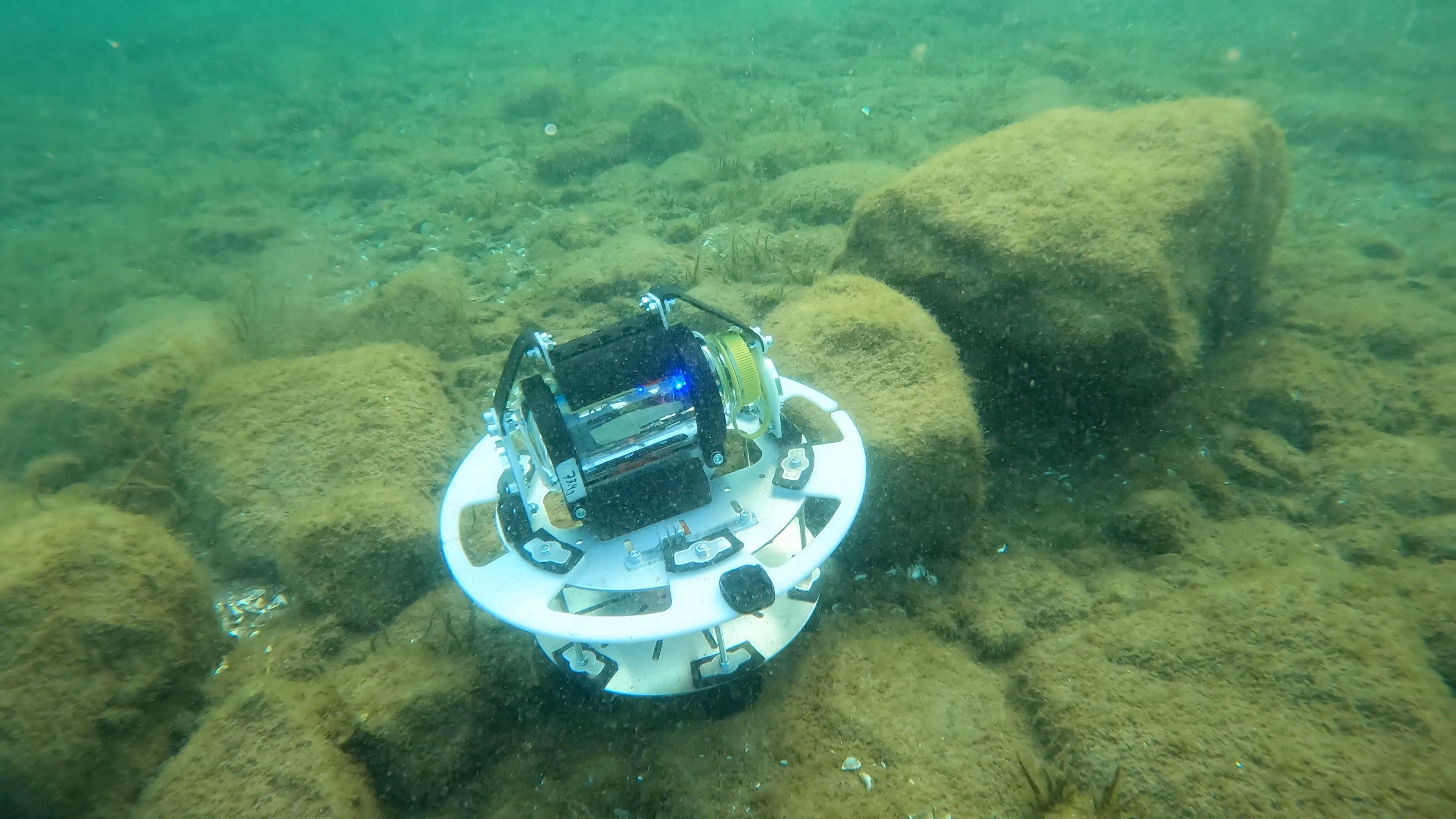
EJA | Intelligent Popup Buoy

Eja is an Open Source project that is developing an intelligent popup buoy.
Step 1Define
The Problem
This type of ropeless fishing gear aims to decrease the occurrence of marine species entanglements with fishing gear, prevent ghost gear creation, and provide novel technologies for the fishing process.
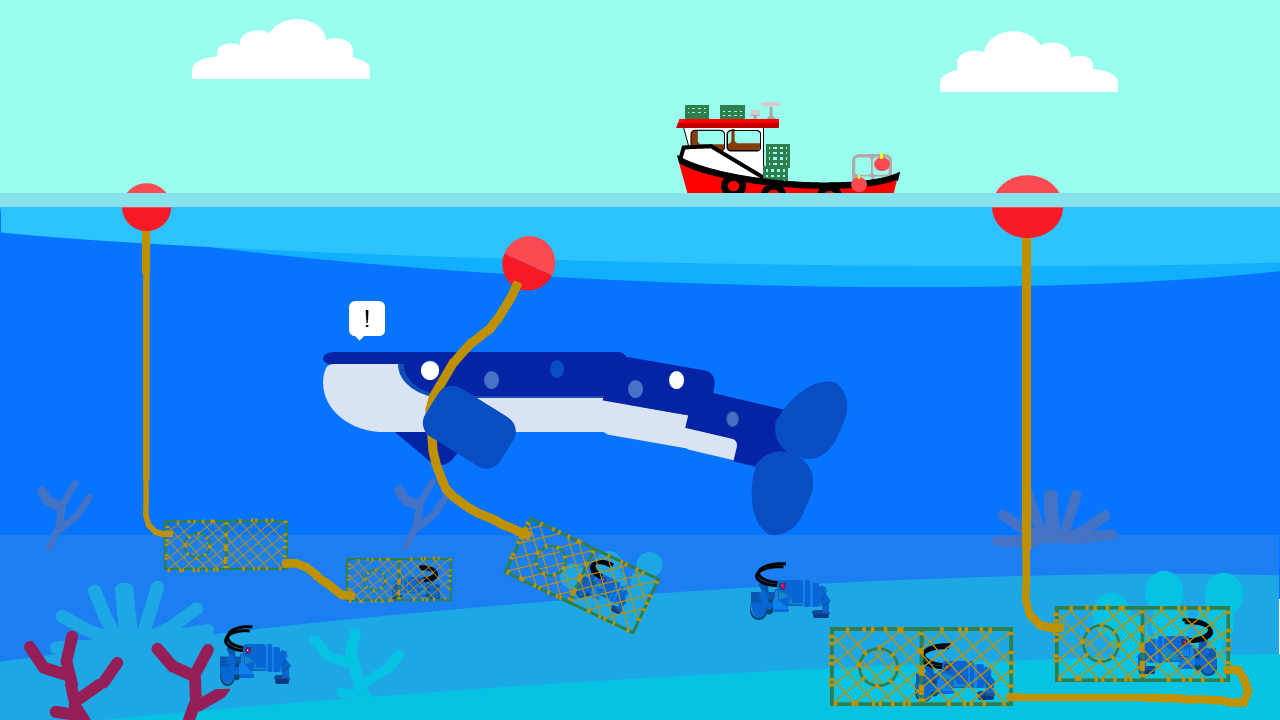
Visual representation of the problem of marine entanglements.
Since 2007, studies of gear removed from whales have shown that 91% of cases involved vertical lines. Abandoned gear continues to catch fish and not only creates harmful environmental and ecological effects, it also causes socioeconomic consequences. In 2016 the removal of 34,408 abandoned pots led to gear efficiency gains and an additional 13,504 MT in harvest valued at US $21.3 million. Up to 10% of the world’s ocean plastic (and 70% of large pieces) comes from lost or abandoned fishing gear. The principal causes of lost fishing gear are unexpected position changes and entanglements.
The proposed solution includes an intelligent buoy that allows fishers to track the position of the traps, and a ropeless mechanism that prevents entanglements.
Operation Process
-
Fishers install the device in the gear, and define the maximum time that it will be underwater. Later, the fishers deploy the gear onto the water. The device stores its location and sends it to the server/app.
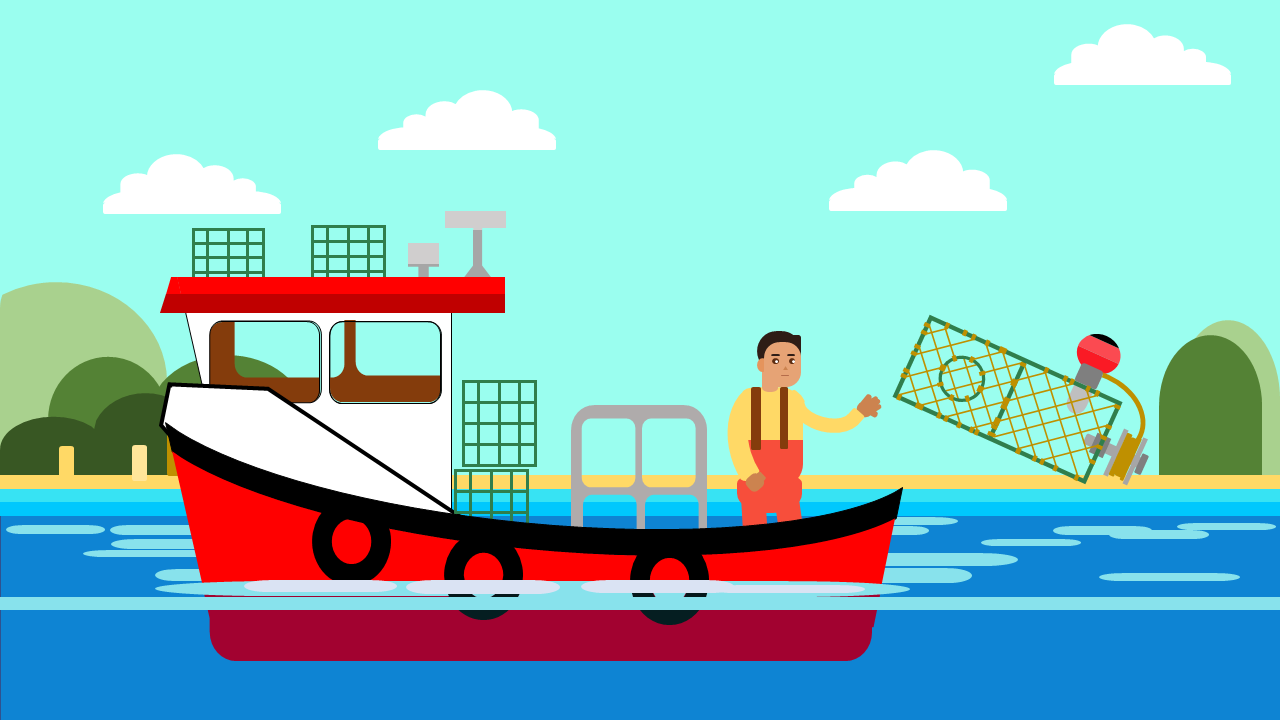
Deployment of the popup buoy.
-
The traps wait on the seafloor during the predefined time.
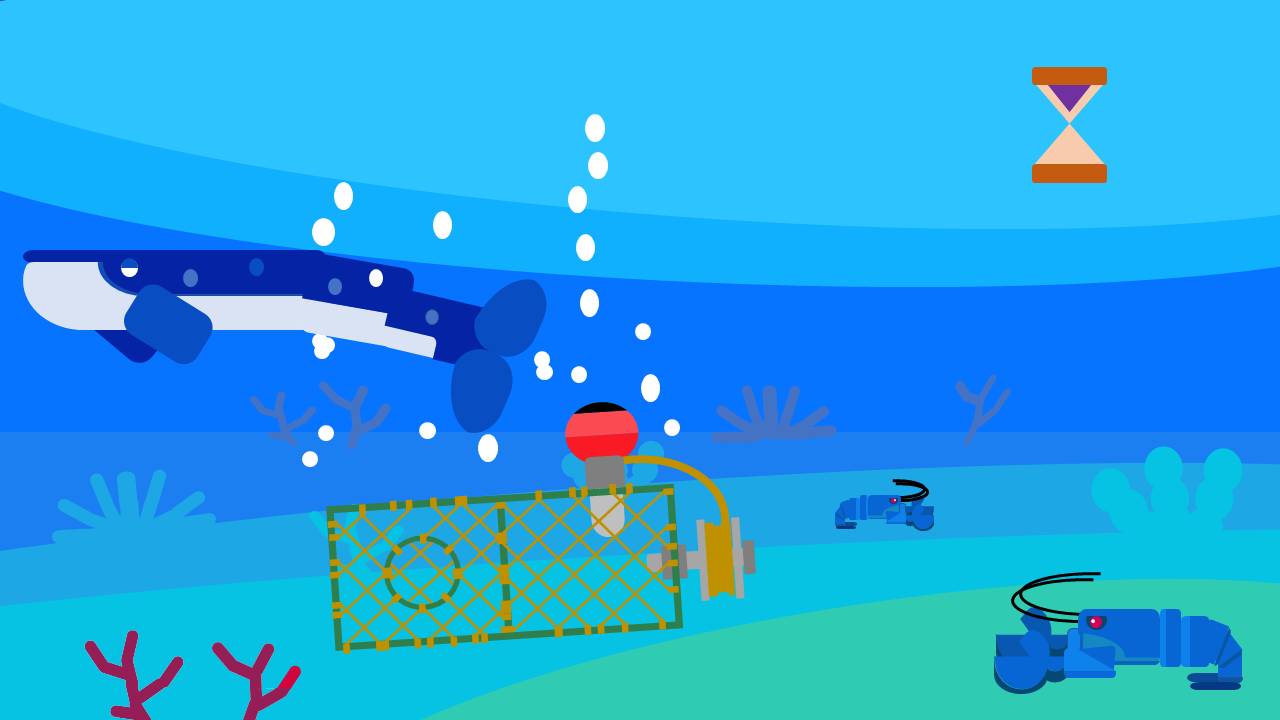
Fishing time.
-
The buoy is released if the time lapse ends or if the device detects that the trap has reached its full capacity. When the buoy gets to the surface it transmits its location.
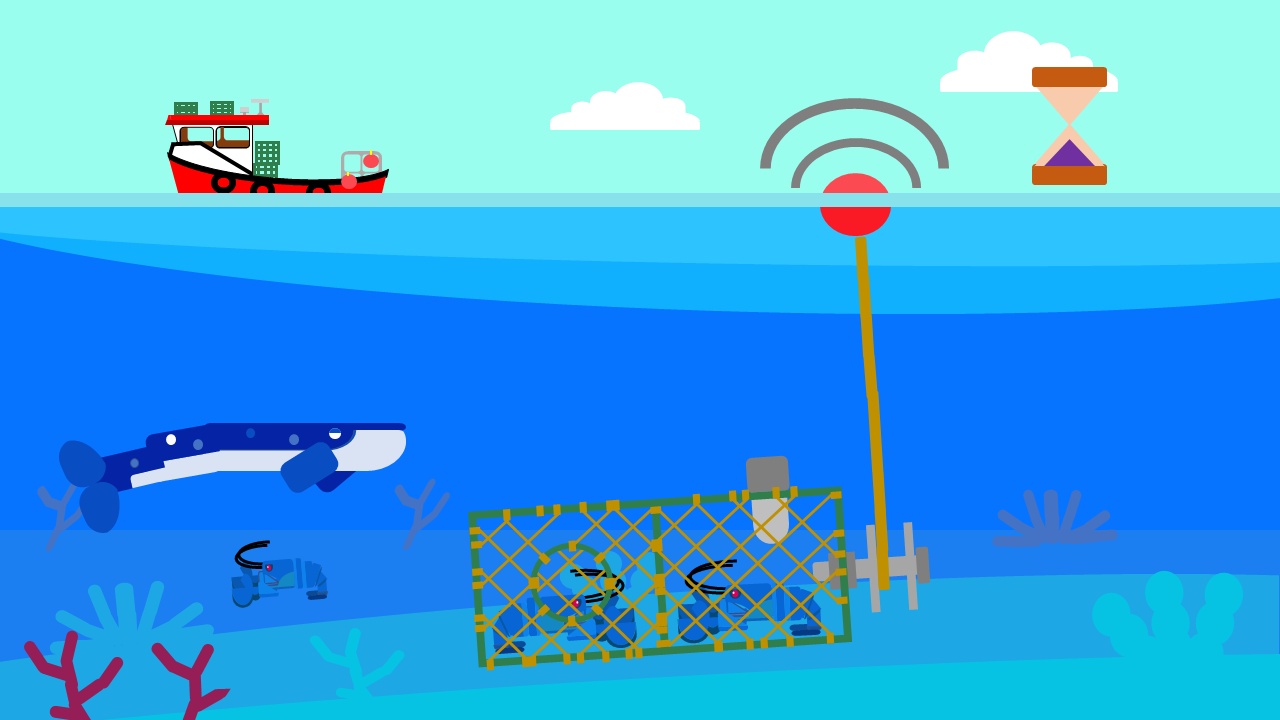
Release process.
-
The fishers find the buoy and retrieve the gear.
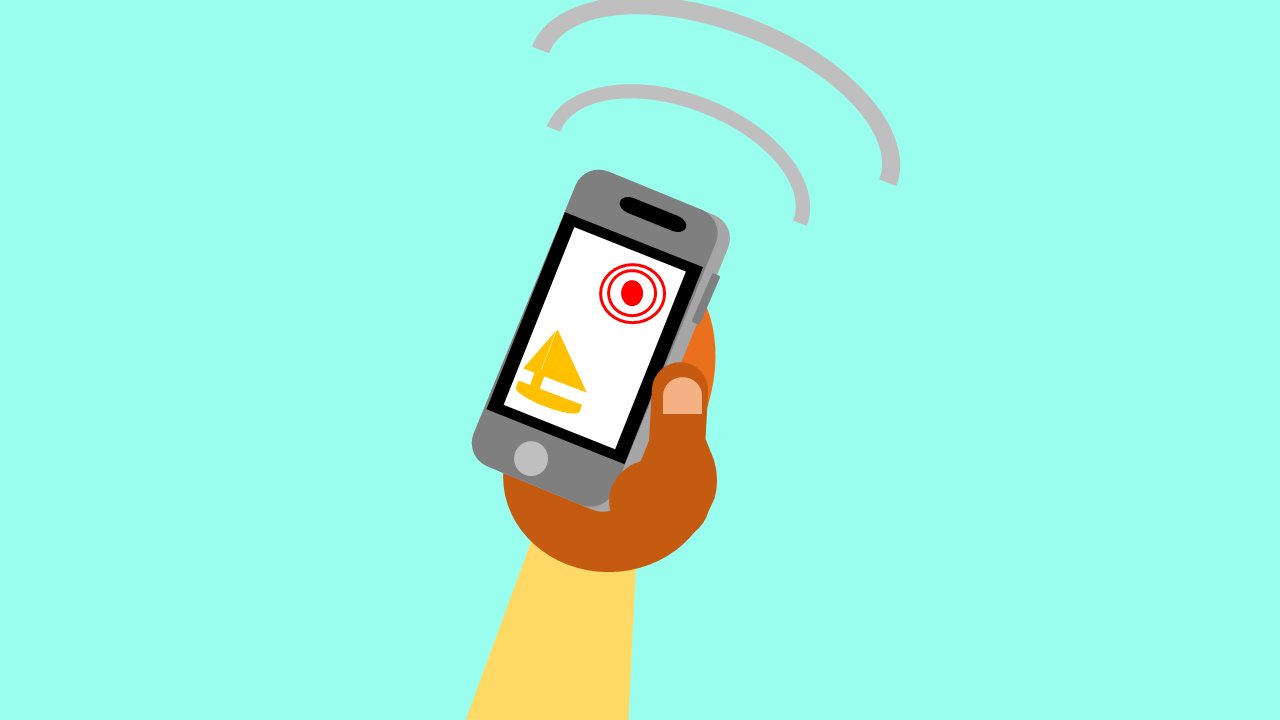
Communication with the Buoy.
What It Had to Do
For the electronics, the operation process above comes down to four things:
- ScheduleLet the fishers set the maximum time the gear stays underwater before it is deployed
- LocateStore the deployment position and send it to the server/app
- ReleaseFree the buoy when that time runs out, or when the trap is detected to be full
- ReportTransmit the buoy's location once it reaches the surface, so the fishers can find it and retrieve the gear
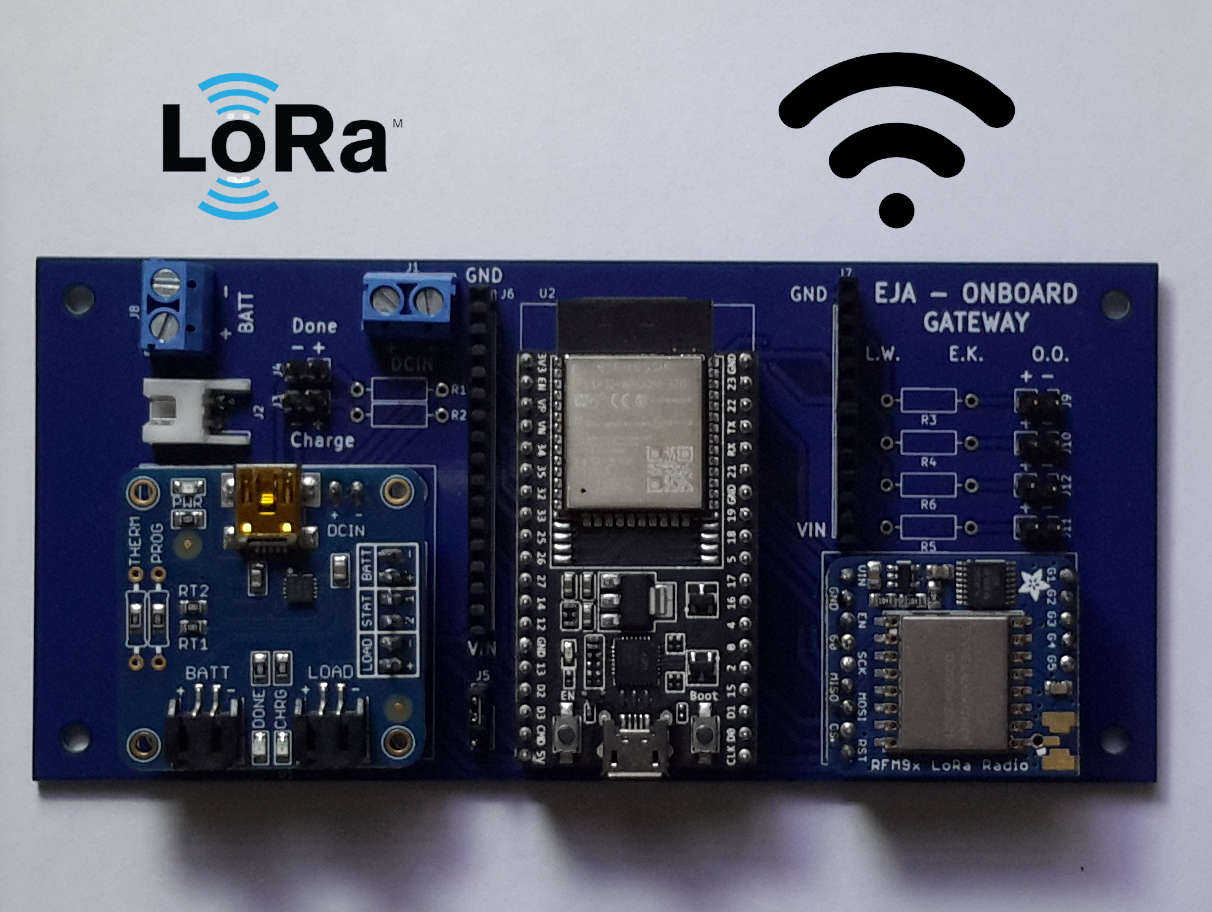
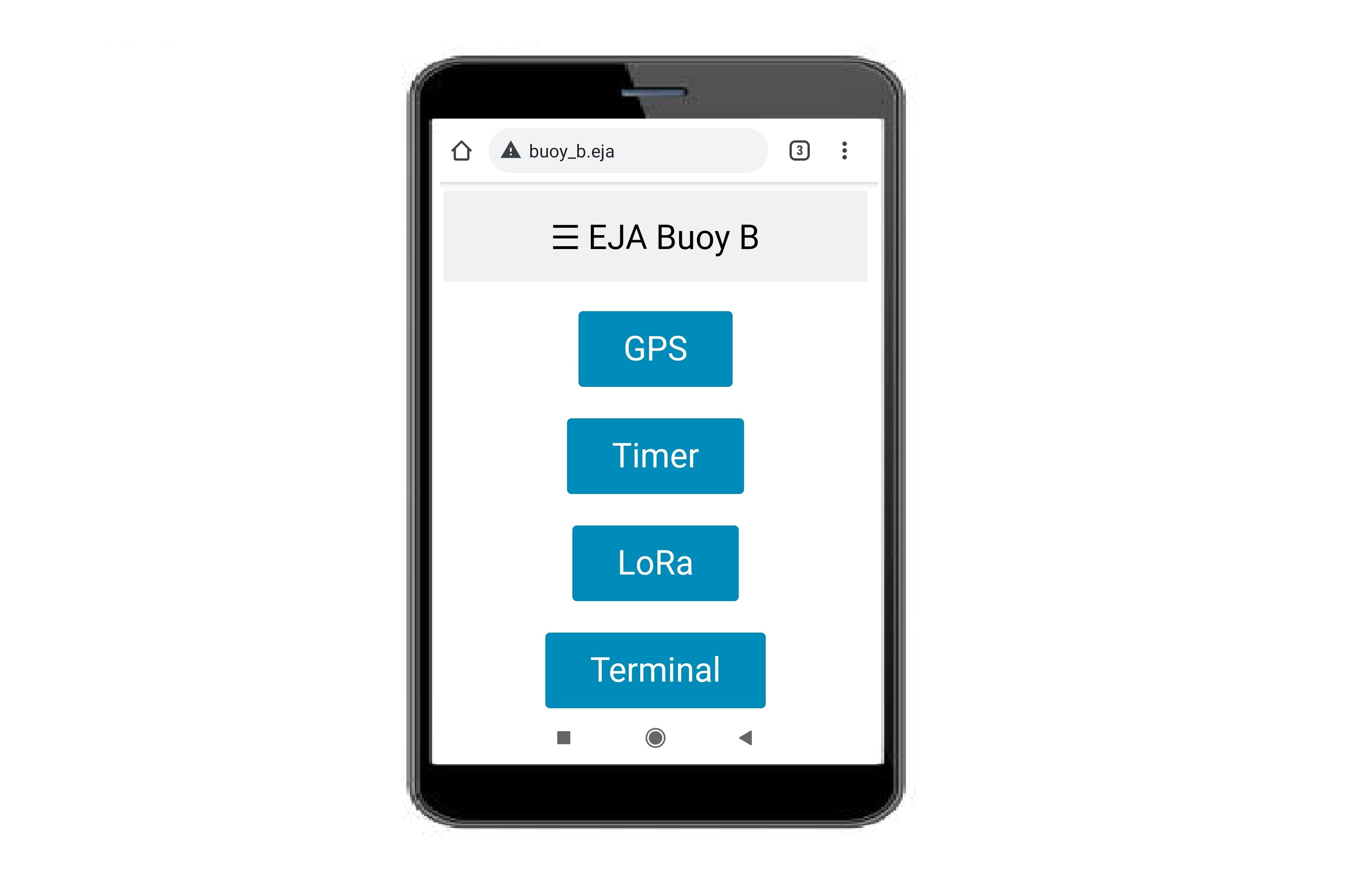
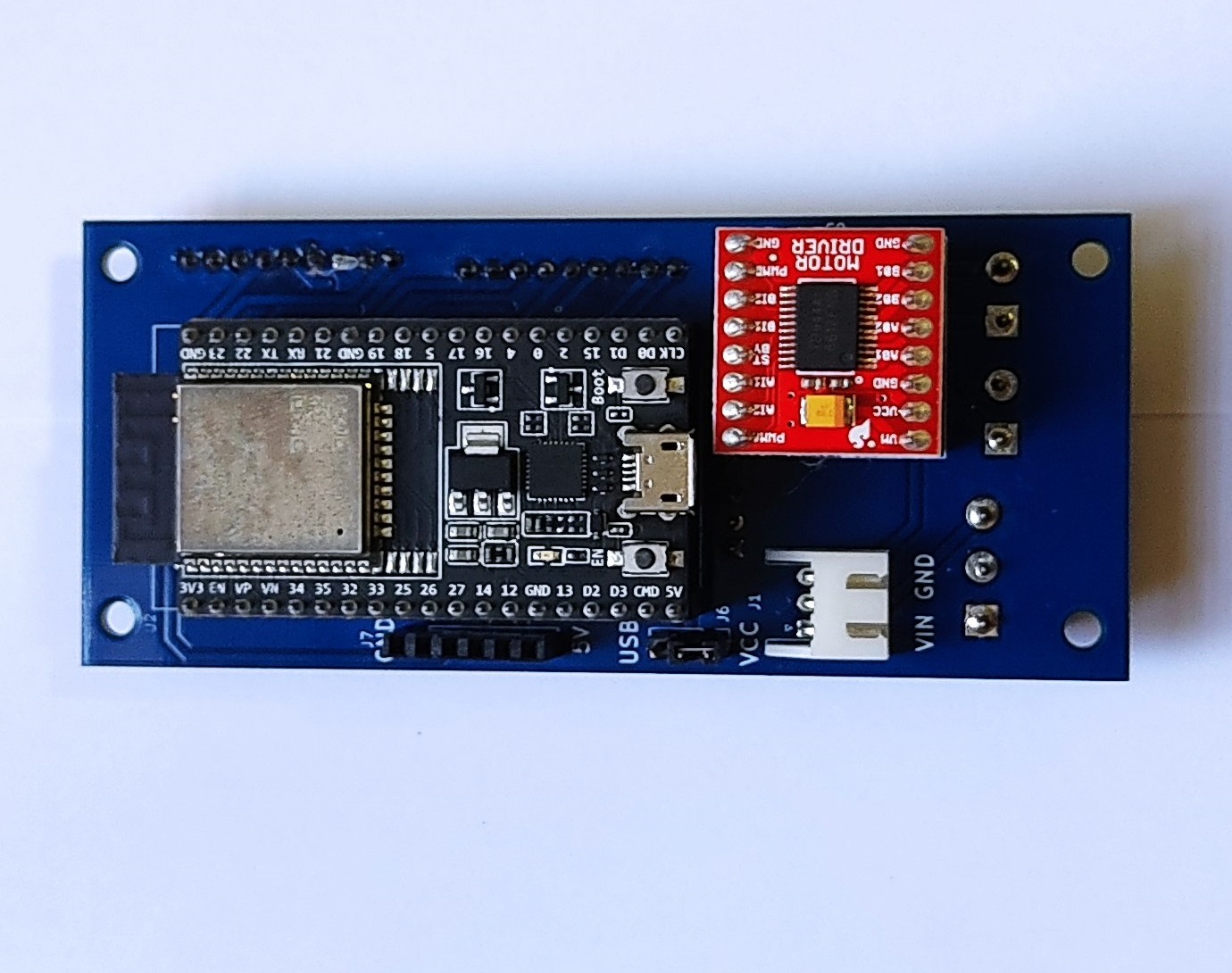
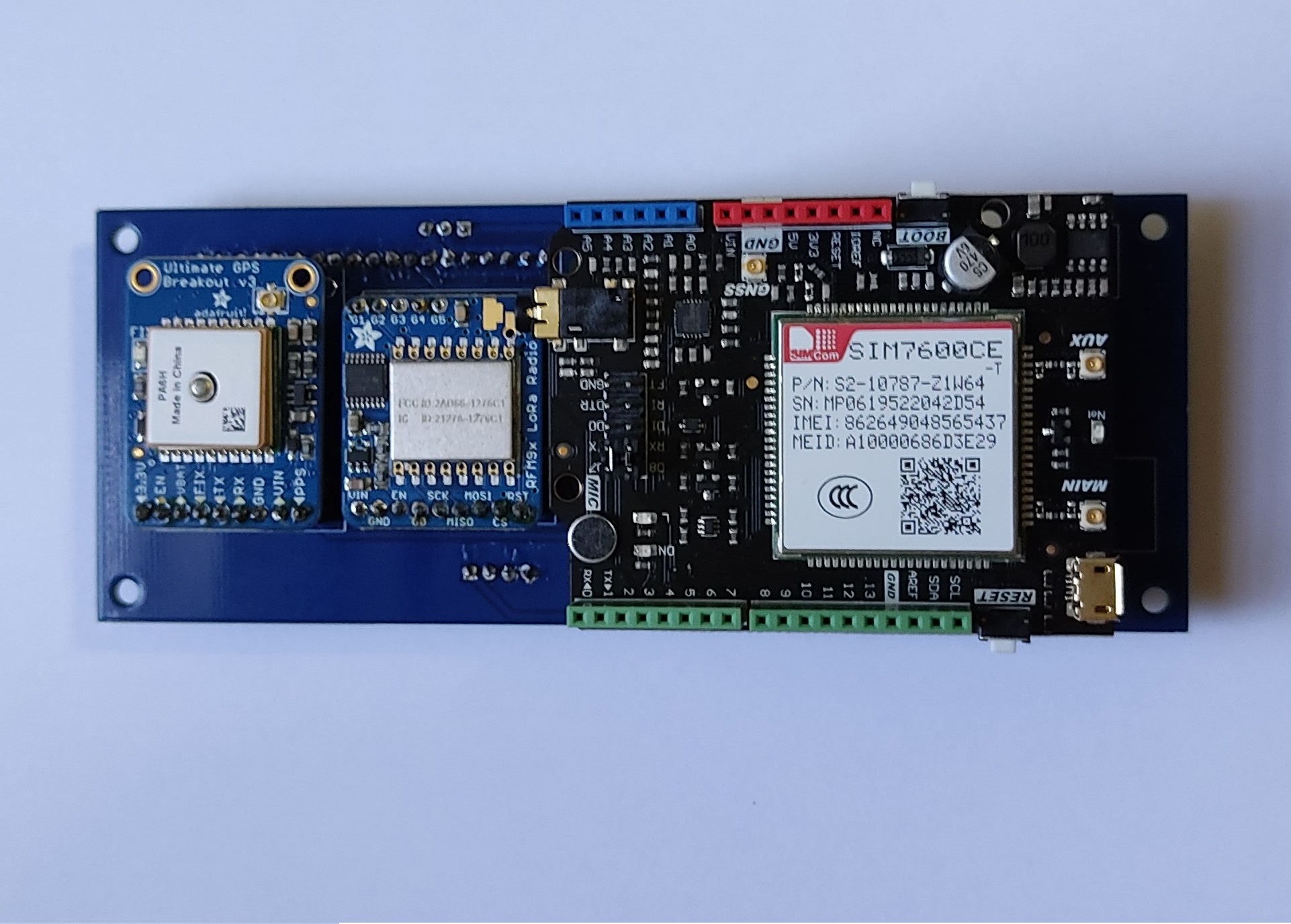
The first prototype's electronics split this across three boards: a buoy board that rides with the trap, in two versions (Buoy A with an optional 4G(LTE) uplink, Buoy B without it), and an Onboard Gateway that stays on the boat and reaches the buoy over a 915 MHz LoRa link. Each board serves its own web page over Wi‑Fi, so the user interface is a phone's browser rather than a screen on the board.
Step 3Build
Prototypes
There are 2 versions of the prototype, the first one was developed in 2020 and the second one is currently being developed. For more information about the prototypes (including videos) visit the original project page.
First Prototype
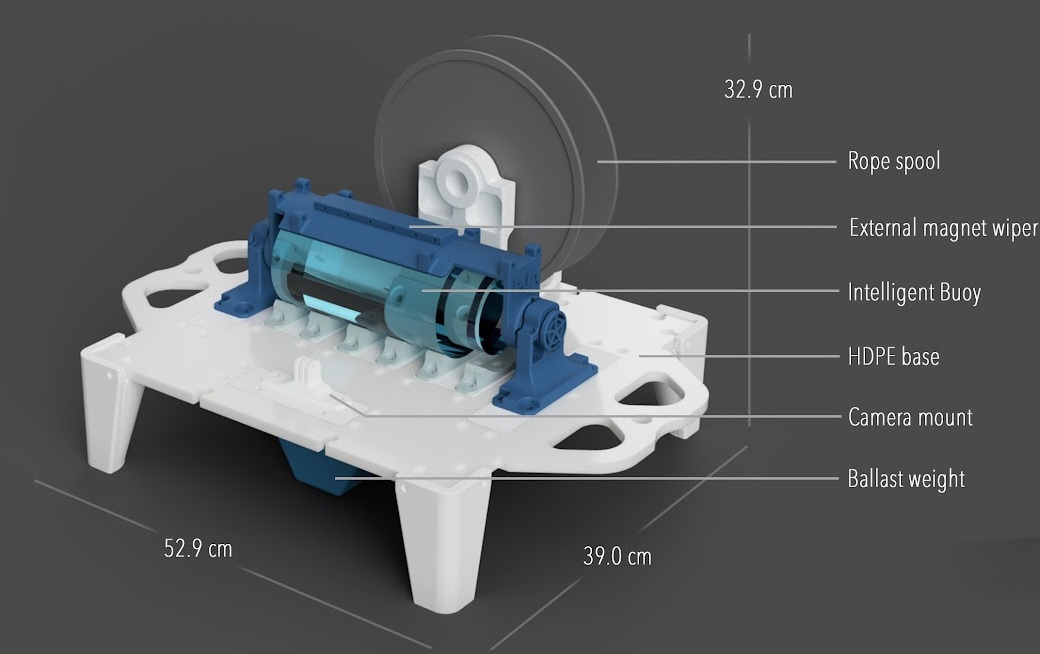
First Prototype
For the first prototype, I fully developed the following embedded systems projects (PCB design, firmware and GUI):
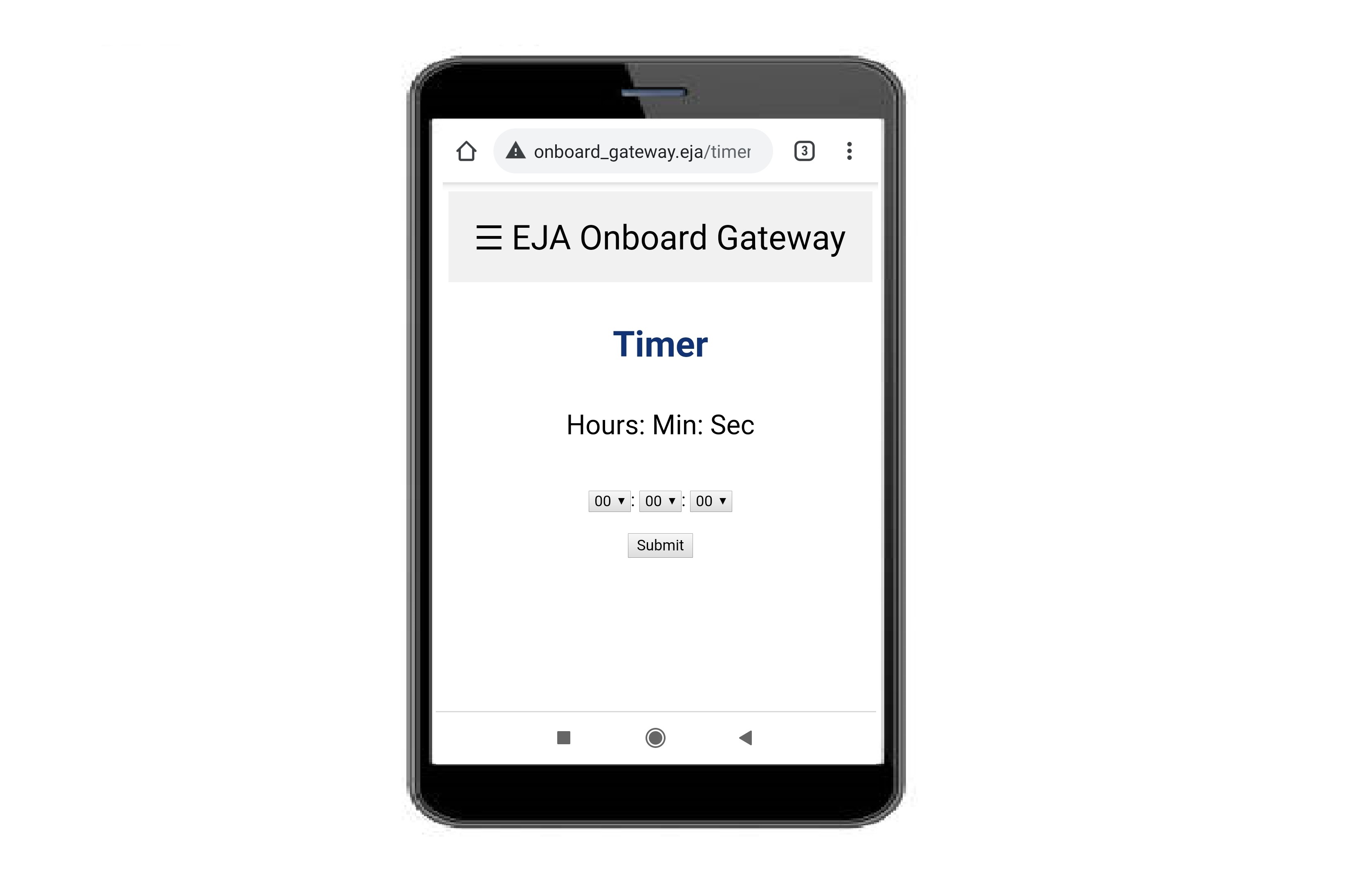
Step 5Refine
Second Prototype
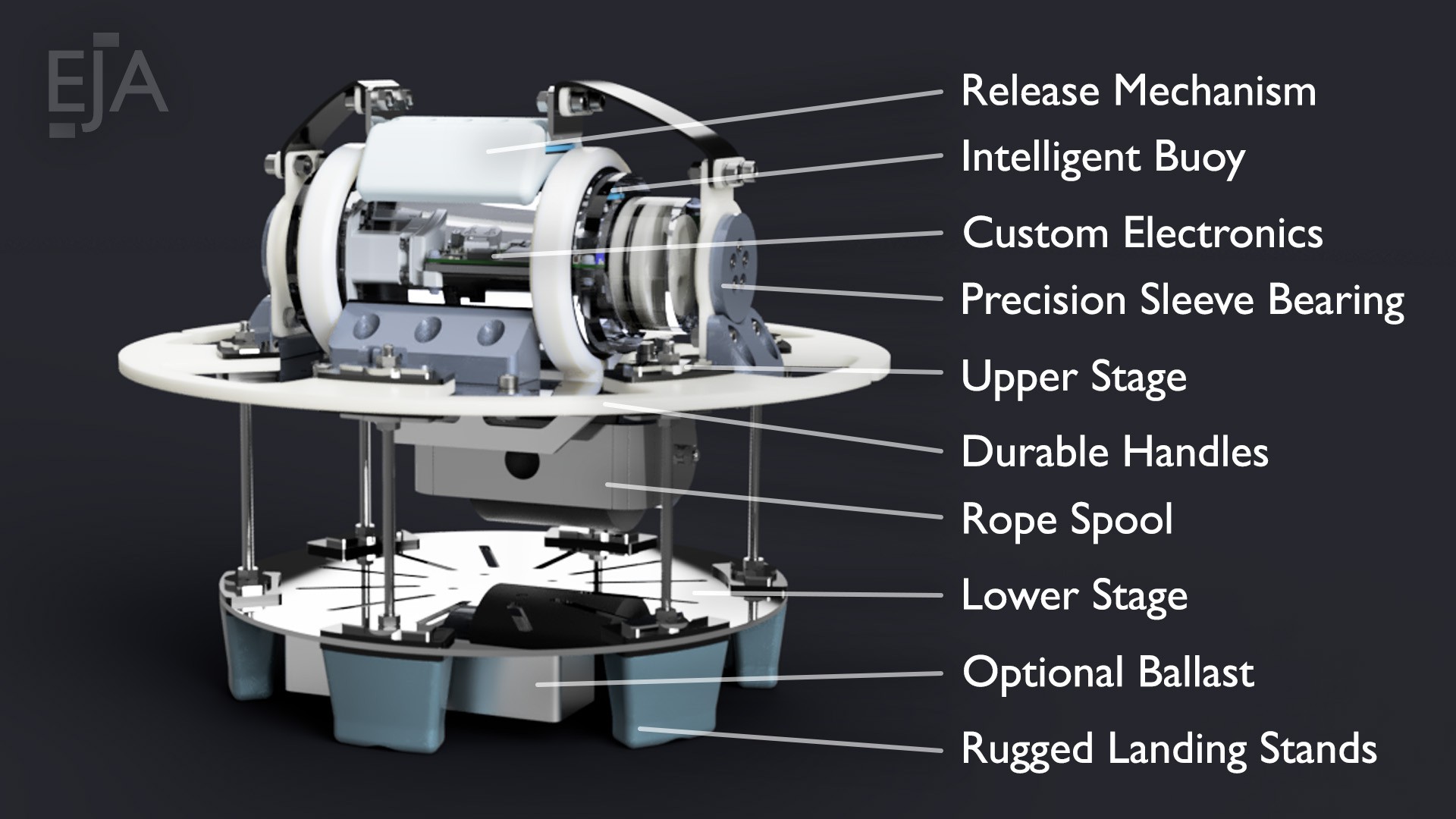
Second Prototype
For the second prototype, I designed the PCB EJA M v1.0 to replace the previous PCB designs Onboard Gateway v1.0, Buoy B v1.0 and Buoy A v1.0.
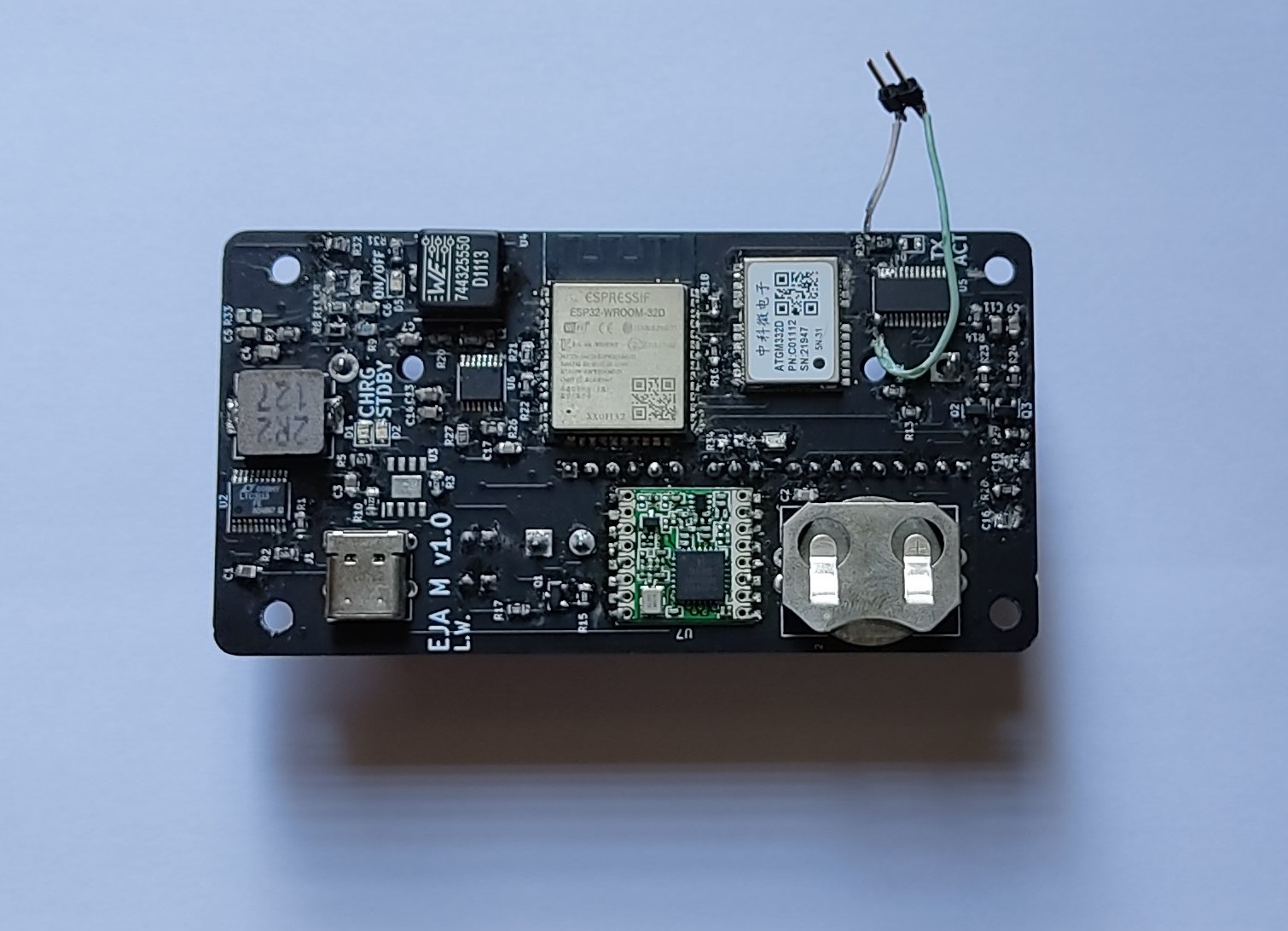
What Changed in the Electronics
The EJA M planning keeps the features of the three first‑prototype boards (some of them redundant) and sets four targets for the single board that replaces them:
- CostReduce the cost, with the previous boards' bill of materials as the reference
- ChargingBattery charging on the board, a feature only the Onboard Gateway had
- SizeReduce the size
- BatteryMeasure the battery level
To get there, the plug‑in development boards of the first prototype (the ESP32‑DevKitC and the Adafruit GPS and LoRa breakouts) give way to EJA M's own ESP32, LoRa, GPS, RTC and power‑supply circuits, and two parts are dropped because the project was no longer using them: the TB6612FNG motor driver and the 4G(LTE) module. The block diagrams of the old and new boards are compared on the EJA M page.
Posted In:
Project