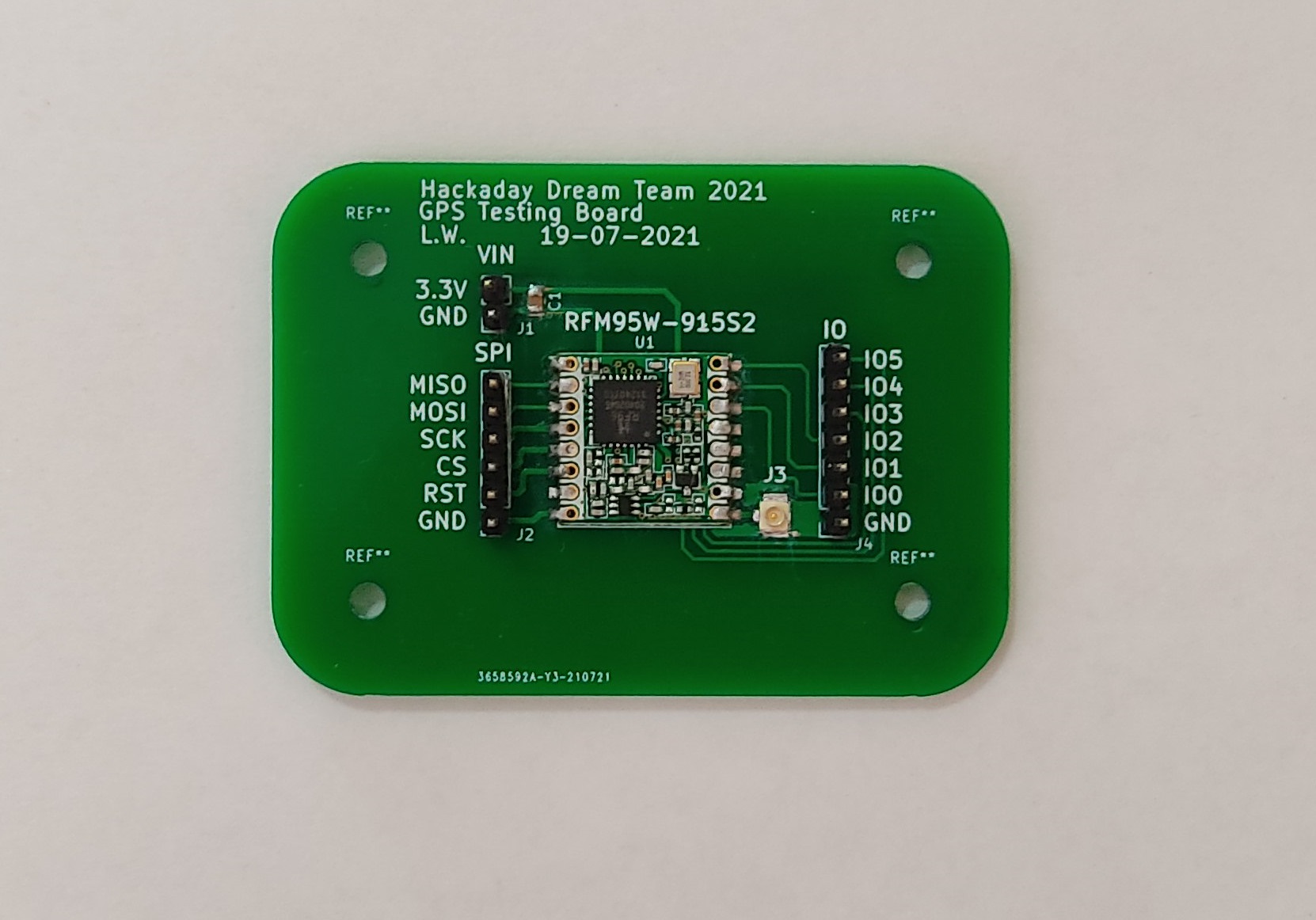
LoRa Development Board | RFM95W-915S2

The RFM95W-915S2 Development board is a PCB that contains an RFM95W LoRa transceiver, a U.FL connector for the external antenna, a decoupling capacitor and a group of headers connected to the different pins of the transceiver. The transceiver can be used as a sender or a receiver.
Step 1Define
It is one of the breakout boards for the EJA "Intelligent Popup Buoy" project (2021 Hackaday Dream Team). LoRa is how the buoy reports its position to a surface gateway, so the RFM95W was proved out here before going onto the EJA M board and the Onboard Gateway.
What It Had to Do
I kept the board intentionally minimal:
- RadioCarry an RFM95W‑915S2 LoRa transceiver (915 MHz band) that can work as sender or receiver
- AntennaTake an external antenna through a U.FL connector
- MinimalNothing else on the board but one decoupling capacitor and the headers
- AccessEvery useful pin on 2.54 mm headers: power (3.3 V, GND), SPI (MISO, MOSI, SCK, CS, RST) and IO0–IO5
- HostBe driven over SPI by an ESP32, the microcontroller selected for the EJA designs
Step 3Build
Schematic
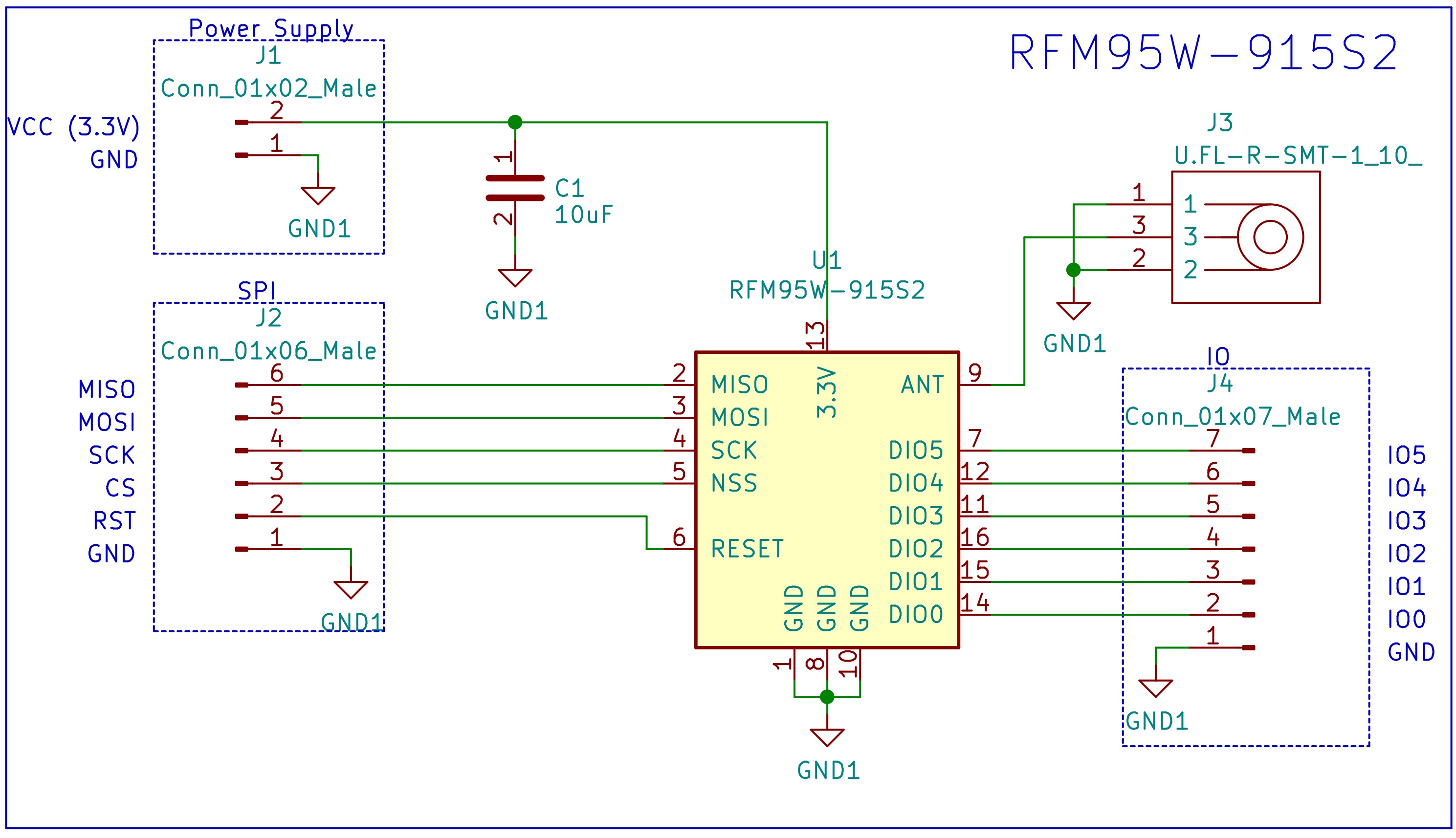
Schematic of the LoRa Development Board.
Bill of Materials
PCB
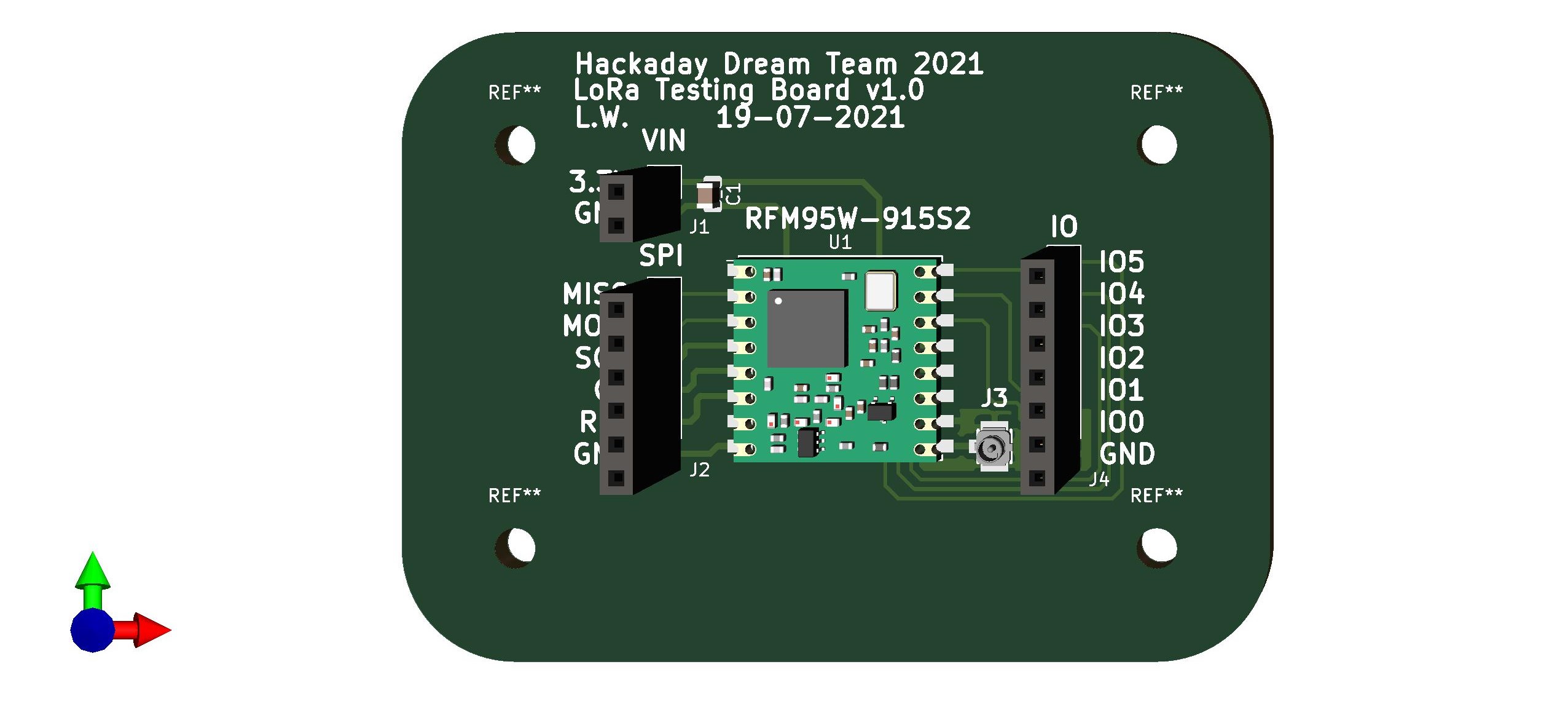
3D Model of the LoRa Development Board.
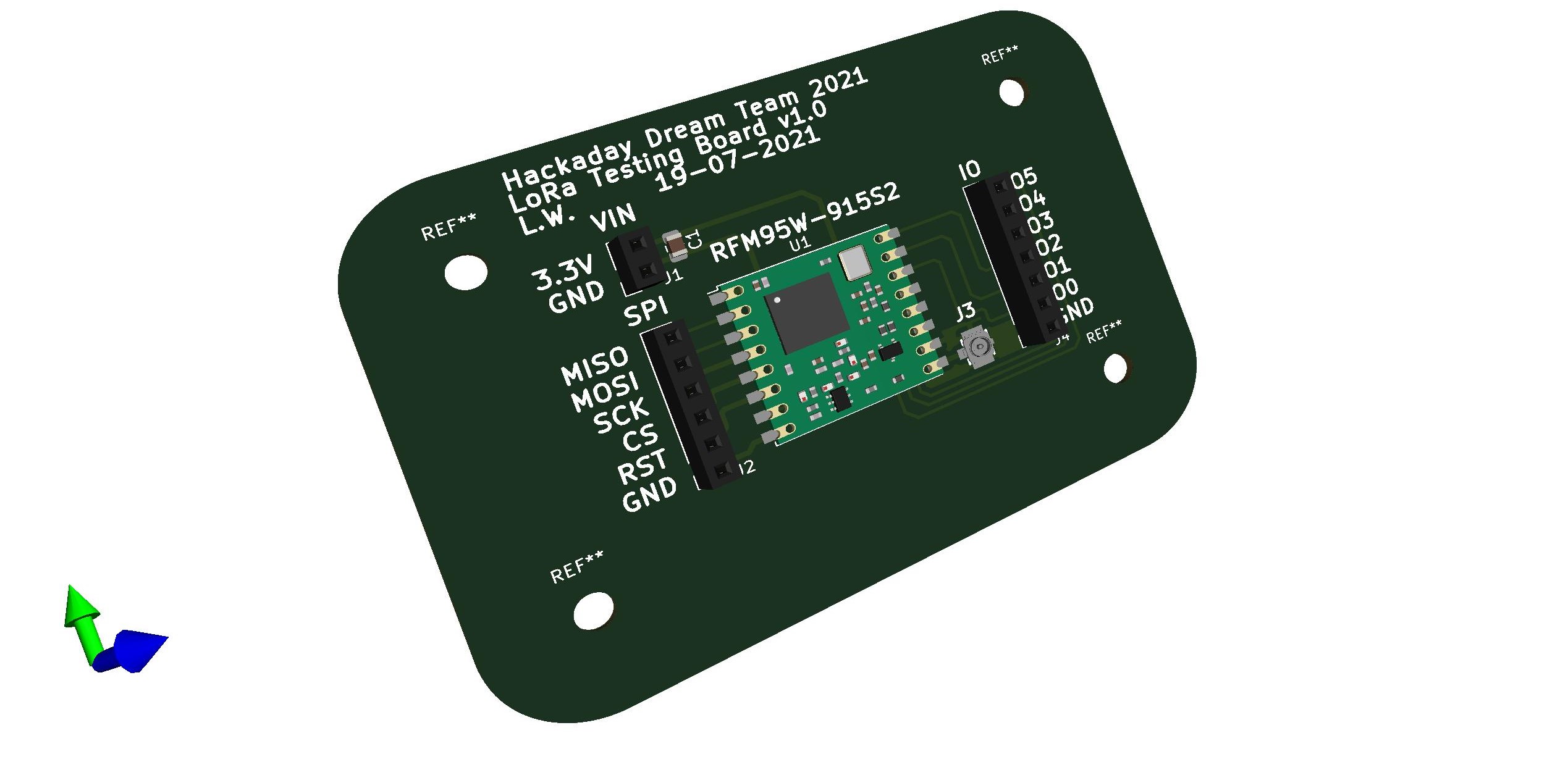
3D Model of the LoRa Development Board.
Firmware
The webpage randomnerdtutorials.com has an amazing tutorial named ESP32 with LoRa using Arduino IDE – Getting Started, that tutorial contains detailed information about how to use the RFM95 with an ESP32 (the same microcontroller that was selected for our designs). I used the same firmware and connections provided by the tutorial.
This repository contains a folder named /Firmware/ that contains the project for the transceiver as a receiver and a sender.
Before flashing: the sketches call LoRa.begin(915E6) to match the RFM95W‑915S2 (915 MHz) module fitted to this board; change that argument only if you pair it with a module for another band (433E6 Asia, 866E6 Europe). The sender and receiver must also share the same sync word (LoRa.setSyncWord(0xF3)) or they ignore each other.
Arduino Setup
For more information about the firmware visit the original tutorial for the RFM95W.
Step 4Test
Sender and Receiver Test
The test requires 2 transceivers, one of them will be used as a sender and the other as a receiver. In this case, one of the transceivers is the RFM95W-915S2 Development board and the other one is the RFM95W transceiver from Adafruit.
The connections are the following:
| ESP32 | RFM95W-915S2 Development Board |
|---|---|
| 3V3 | 3.3V |
| GND | GND |
| GPIO 14 | RST |
| GPIO 5 | CS / NSS |
| GPIO 2 | DIO0 |
| GPIO 18 | SCK |
| GPIO 23 | MOSI |
| GPIO 19 | MISO |
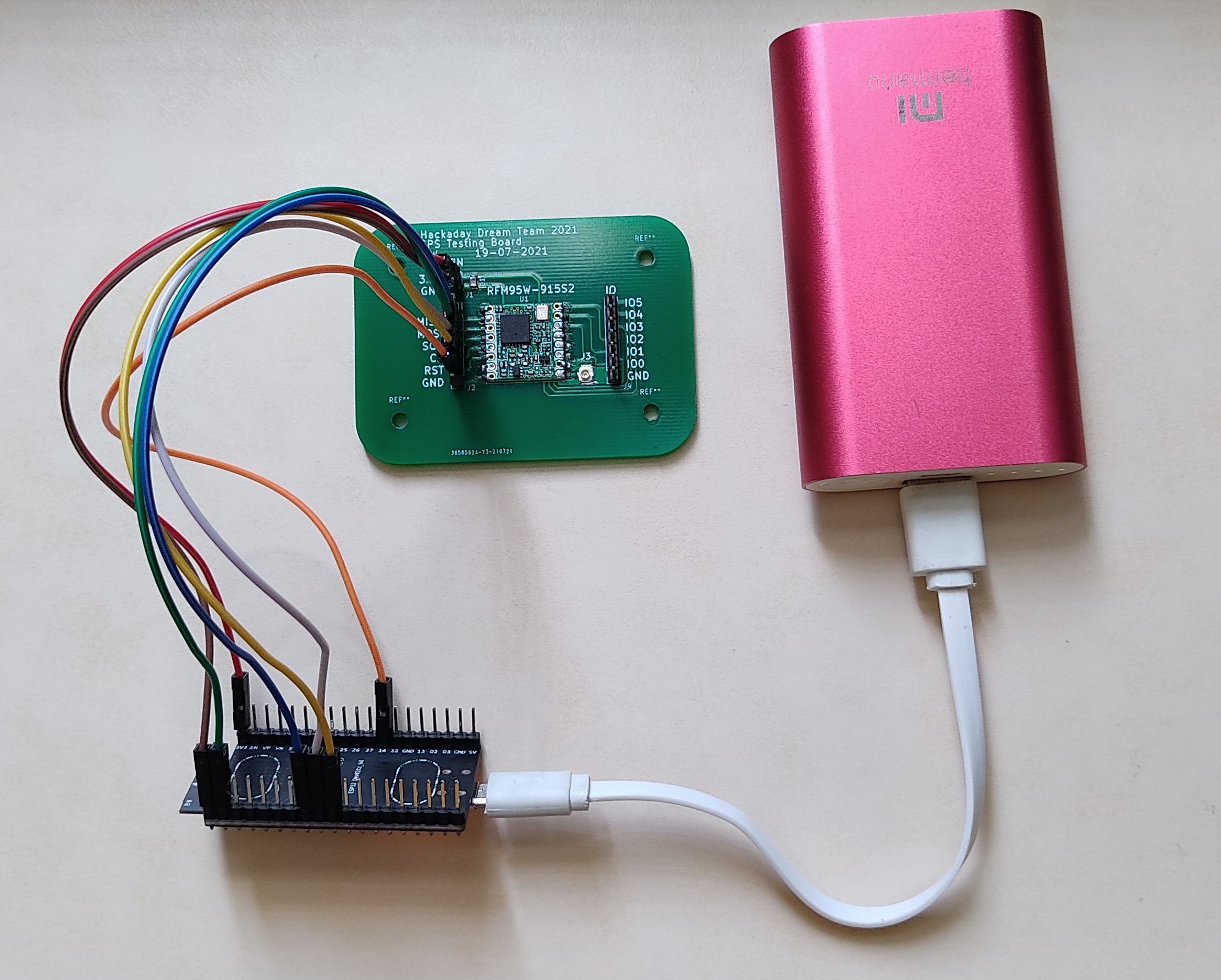
Custom LoRa Dev Board and ESP32 used in the test.
| ESP32 | RFM95W Board from Adafruit |
|---|---|
| 3V3 | VIN |
| GND | GND |
| GPIO 14 | RST |
| GPIO 5 | CS / NSS |
| GPIO 2 | DIO0 |
| GPIO 18 | SCK |
| GPIO 23 | MOSI |
| GPIO 19 | MISO |
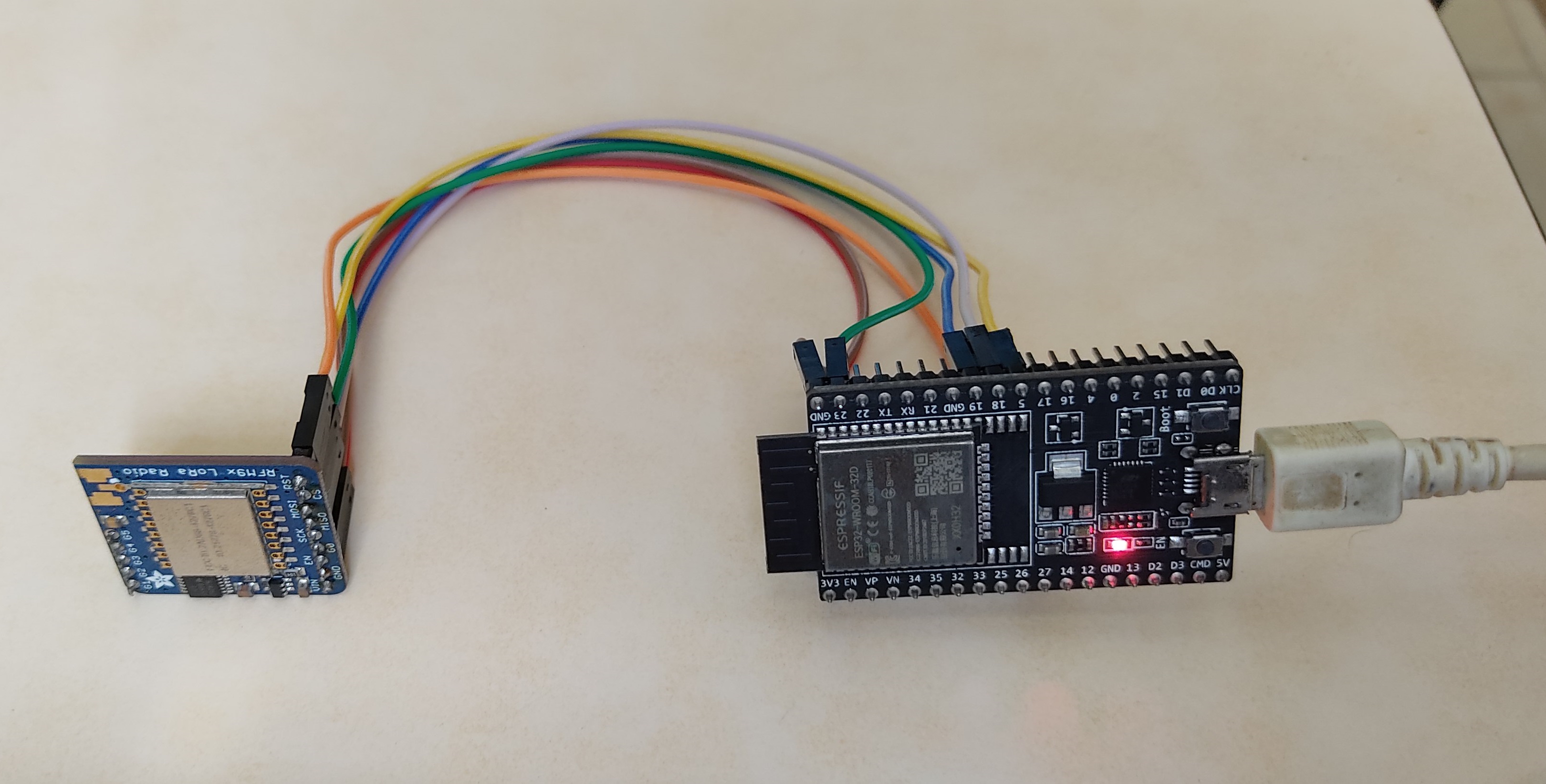
RFM95W transceiver from Adafruit and ESP32 used in the test.
Both of the RFM95W Boards were used as a sender and receiver, the result was successful in both cases. During the test, one of the transceivers sends the package "hello counter", where the counter is a number that goes from 0 to 32767. The other transceiver receives the package and prints the message through serial.
Results visualized in the serial monitor from the receiver circuit:
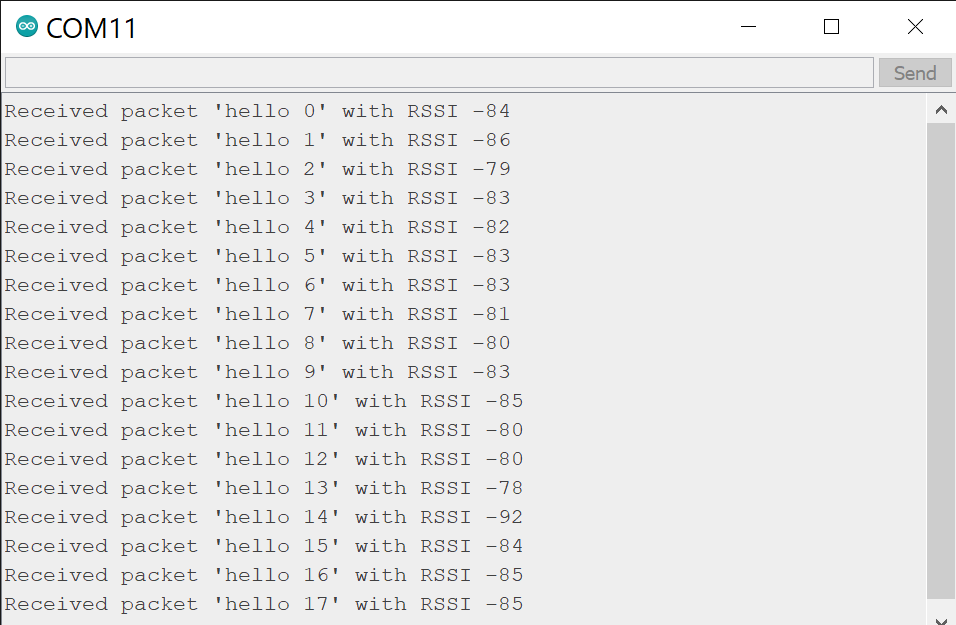
Results from the test.
The capture shows packets hello 0 to hello 17 arriving in order, none missing, with an RSSI between −78 and −92 dBm.
Posted In:
Embedded Hardware