Buoy A | Hackaday Dream Team 2020

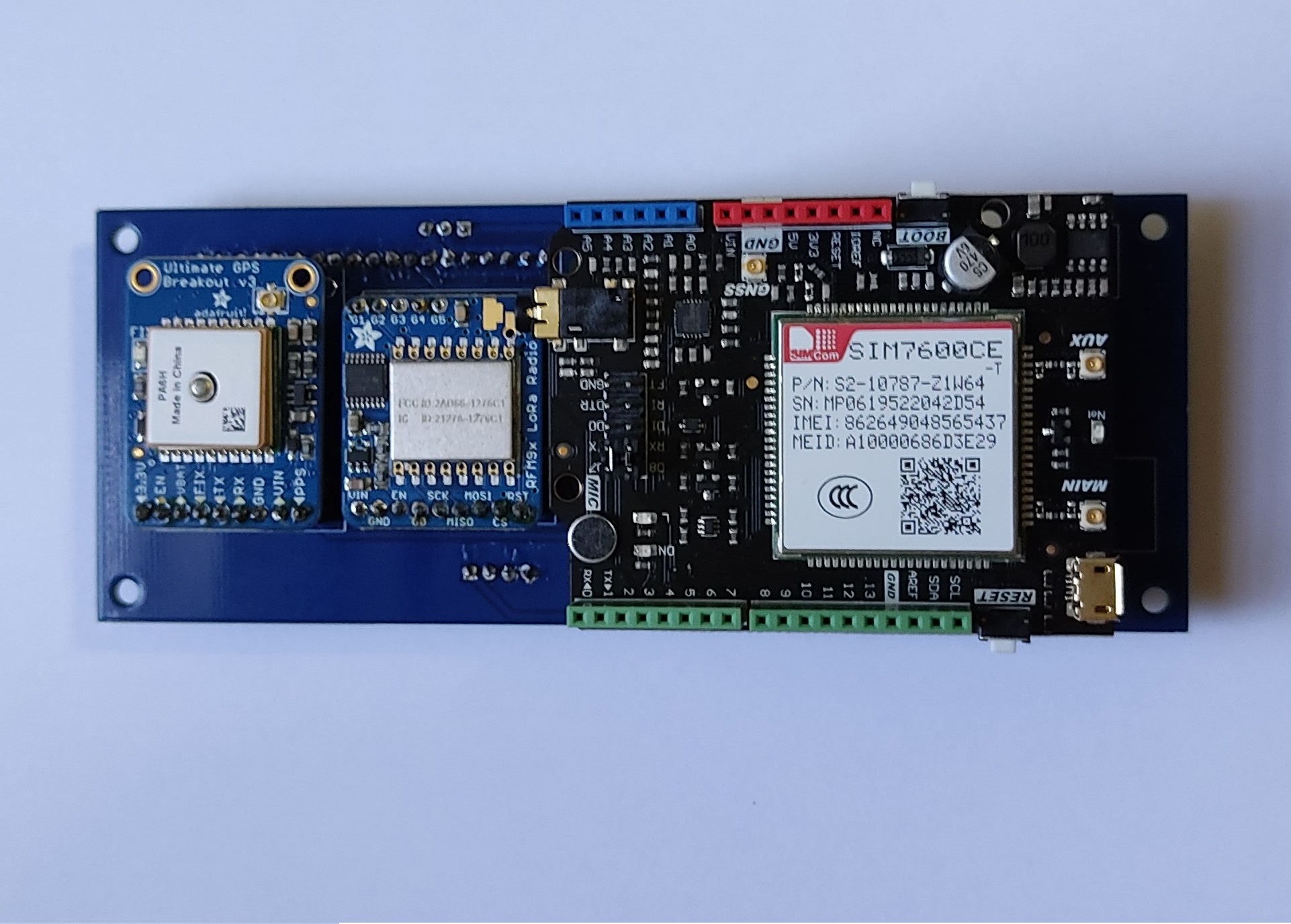
Buoy A V1.0 is a 141.73 mm x 54.86 mm PCB that integrates the 5 main components (ESP32, LoRa, GPS, Motor Driver and GSM/GPRS).
Step 1Define
What It Had to Do
Buoy A is the fuller of the two buoy boards: it goes into the buoy on the trap, keeps the release timer and reports its GPS position so the gear can be recovered (the full operation process is on the project page).
- LocateRead position and time from an Adafruit Ultimate GPS over UART
- LinkReport to the Onboard Gateway over a 915 MHz LoRa link (RFM95W)
- ReleaseDrive the release actuator: a servo from a PWM pin, or a DC motor through the TB6612FNG driver
- UplinkCarry an optional SIM7600 4G(LTE) shield for a cellular link where there is coverage
- InterfaceLet a phone set the release timer through the board's own Wi‑Fi access point
- PowerRun from a 5–15 V battery through a buck converter, or from a single 3.7 V cell through a boost converter
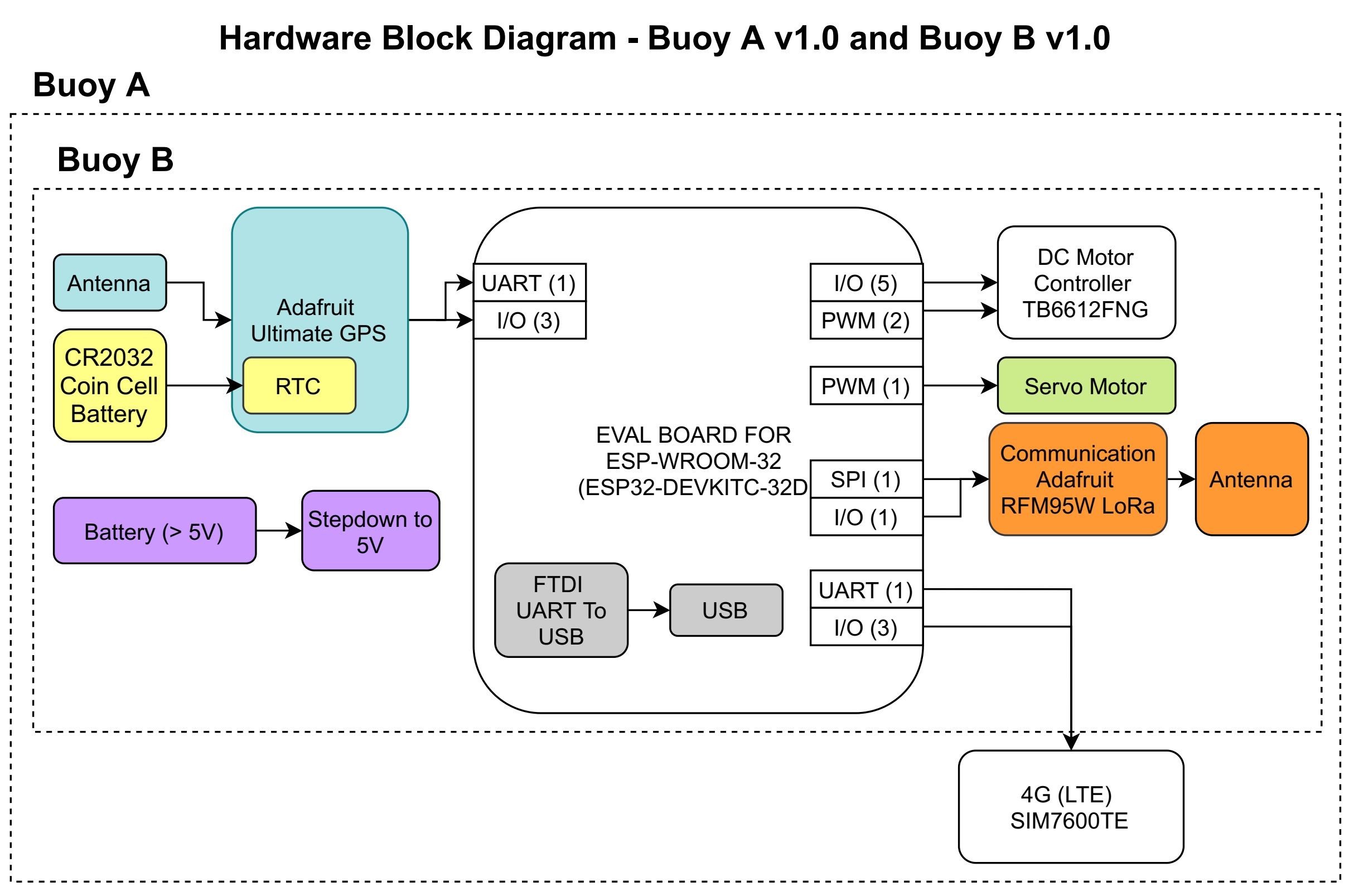
Hardware block diagram of Buoy A and Buoy B v1.0 (Buoy B is the inner box), from the EJA M planning.
Step 3Build
Main Components
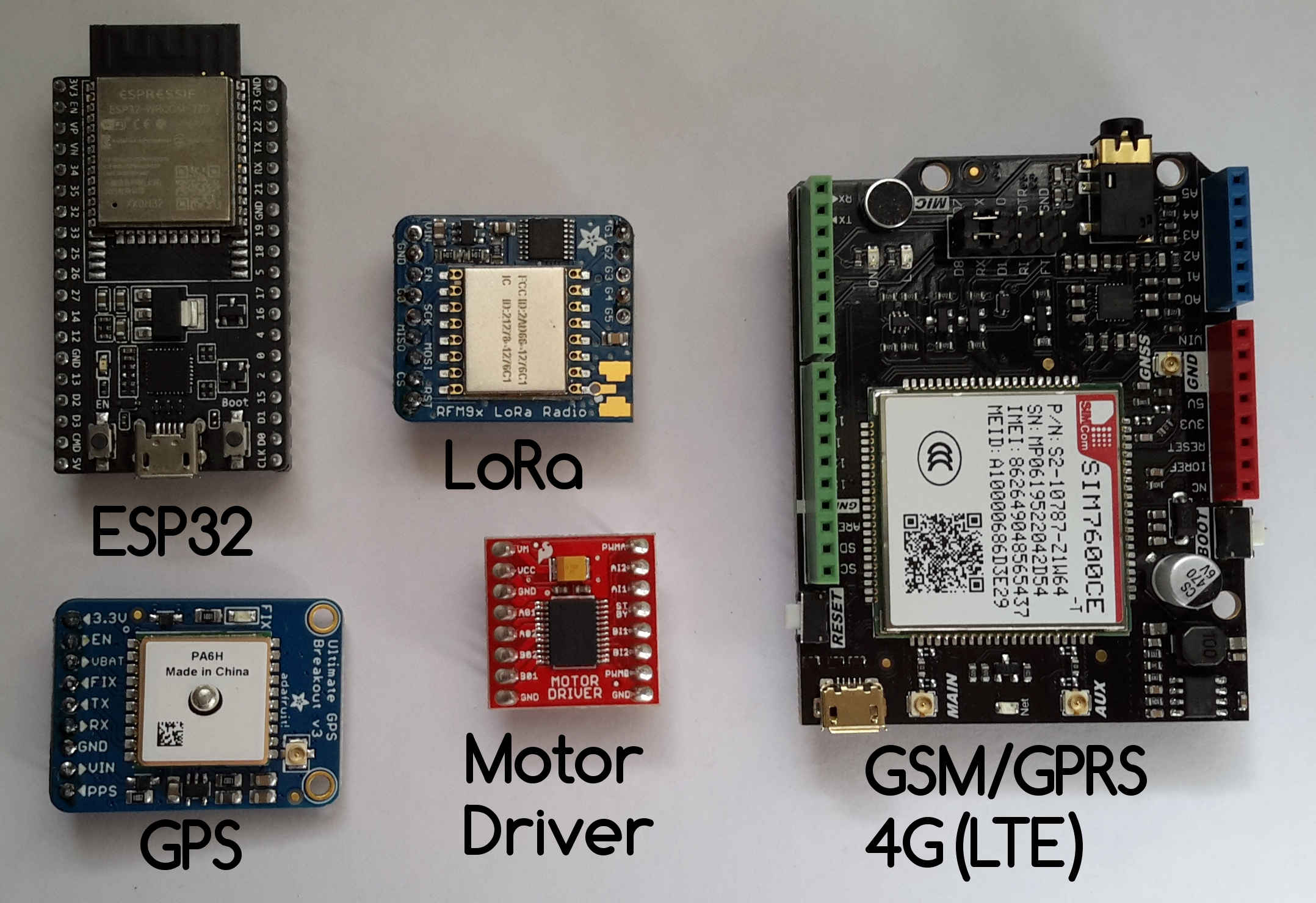
Main components of Buoy A v1.0.
Sources:
- ESP32: ESP32-DEVKITC-32D
- LoRa: RFM95W LoRa Radio
- GPS: Adafruit Ultimate GPS
- Motor Driver: TB6612FNG MOTOR DRIVER BOARD
- 4G(LTE): SIM7600CE-T 4G(LTE) Arduino Shield
Schematic
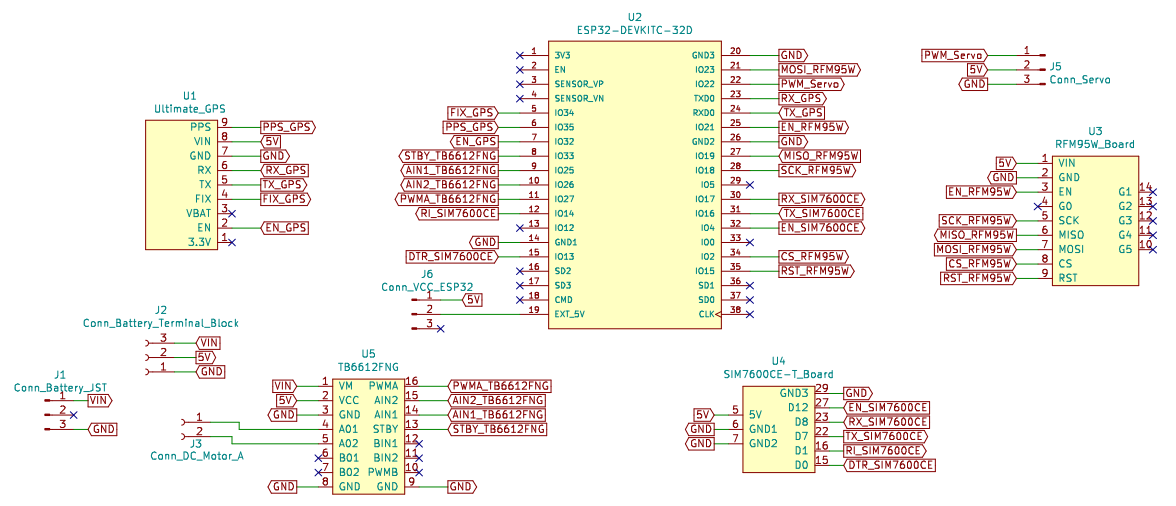
Schematic of Buoy A v1.0.
For more information about the design check the original post in the project's page.
Layout
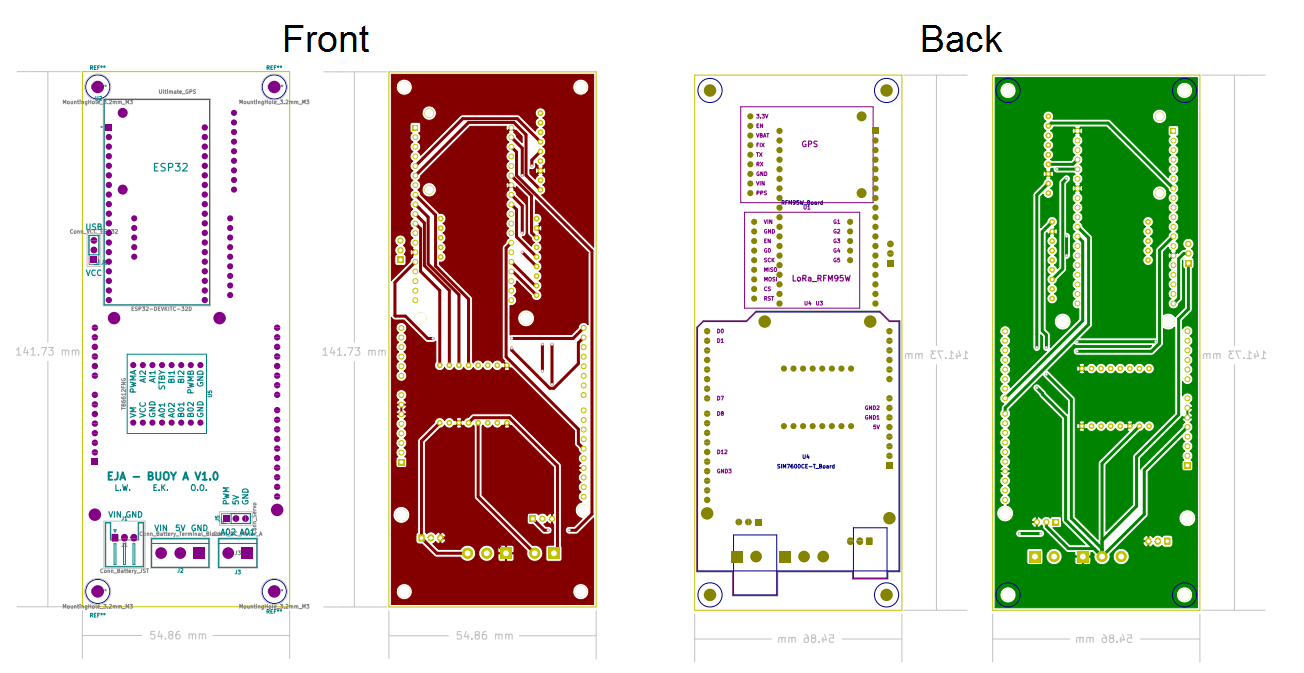
PCB Layout of Buoy A v1.0.
PCB
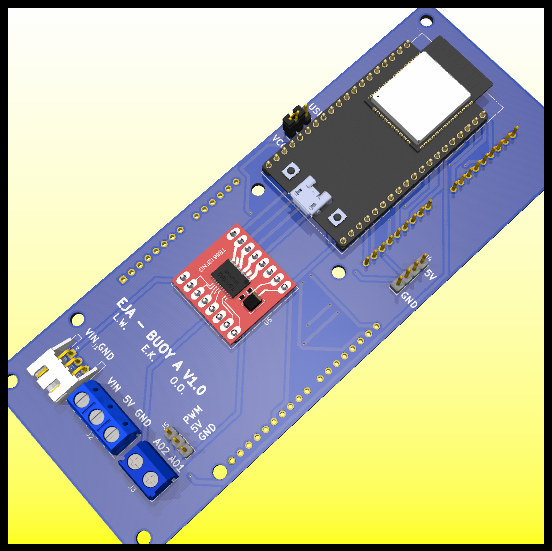
PCB: Front Layer.
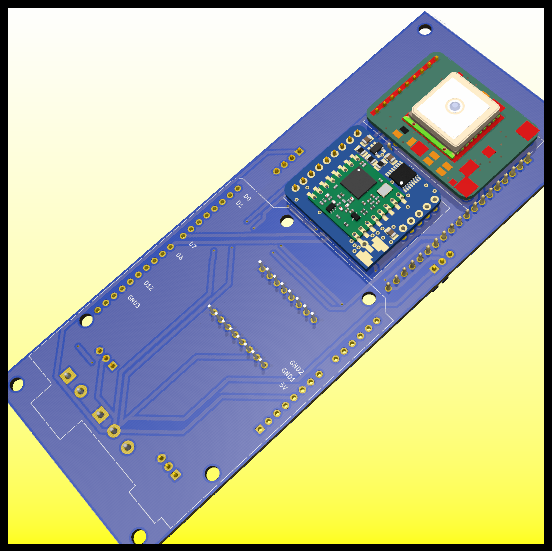
PCB: Back Layer.
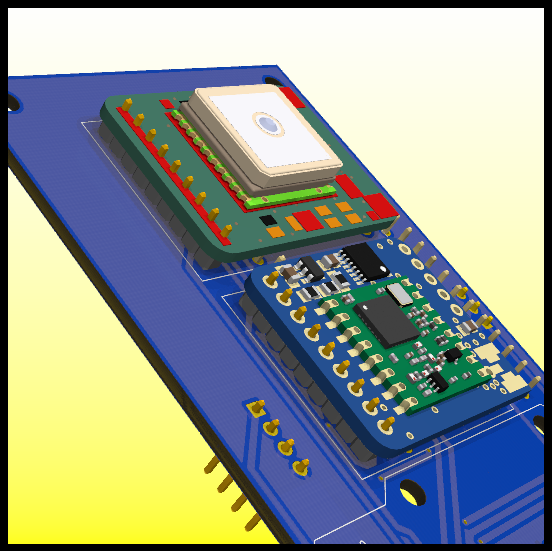
PCB: GPS and LoRa Module.
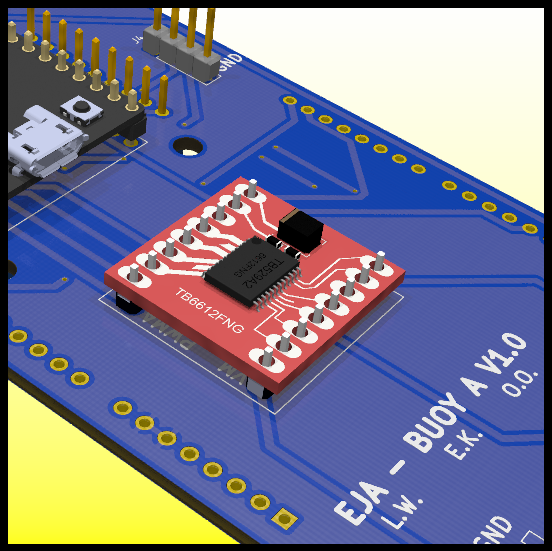
PCB: Motor Driver.
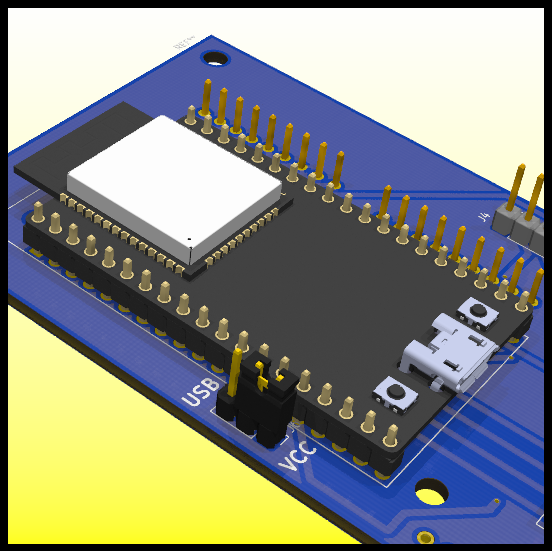
PCB: ESP32.
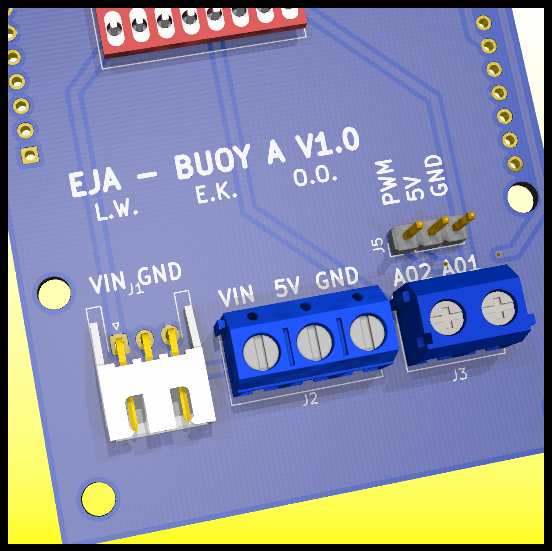
PCB: Connectors.
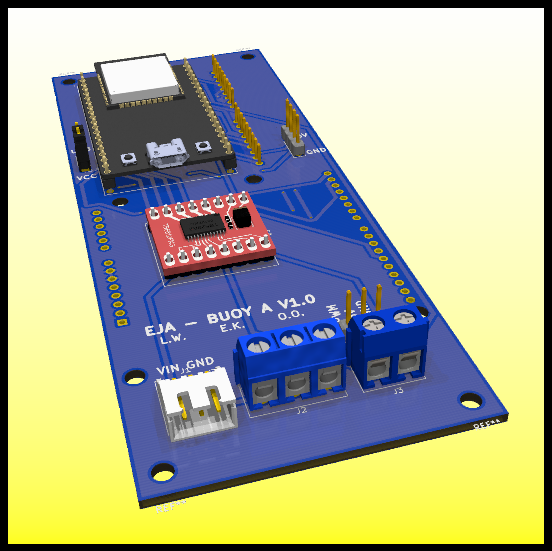
PCB: Front Layer.
Assembly
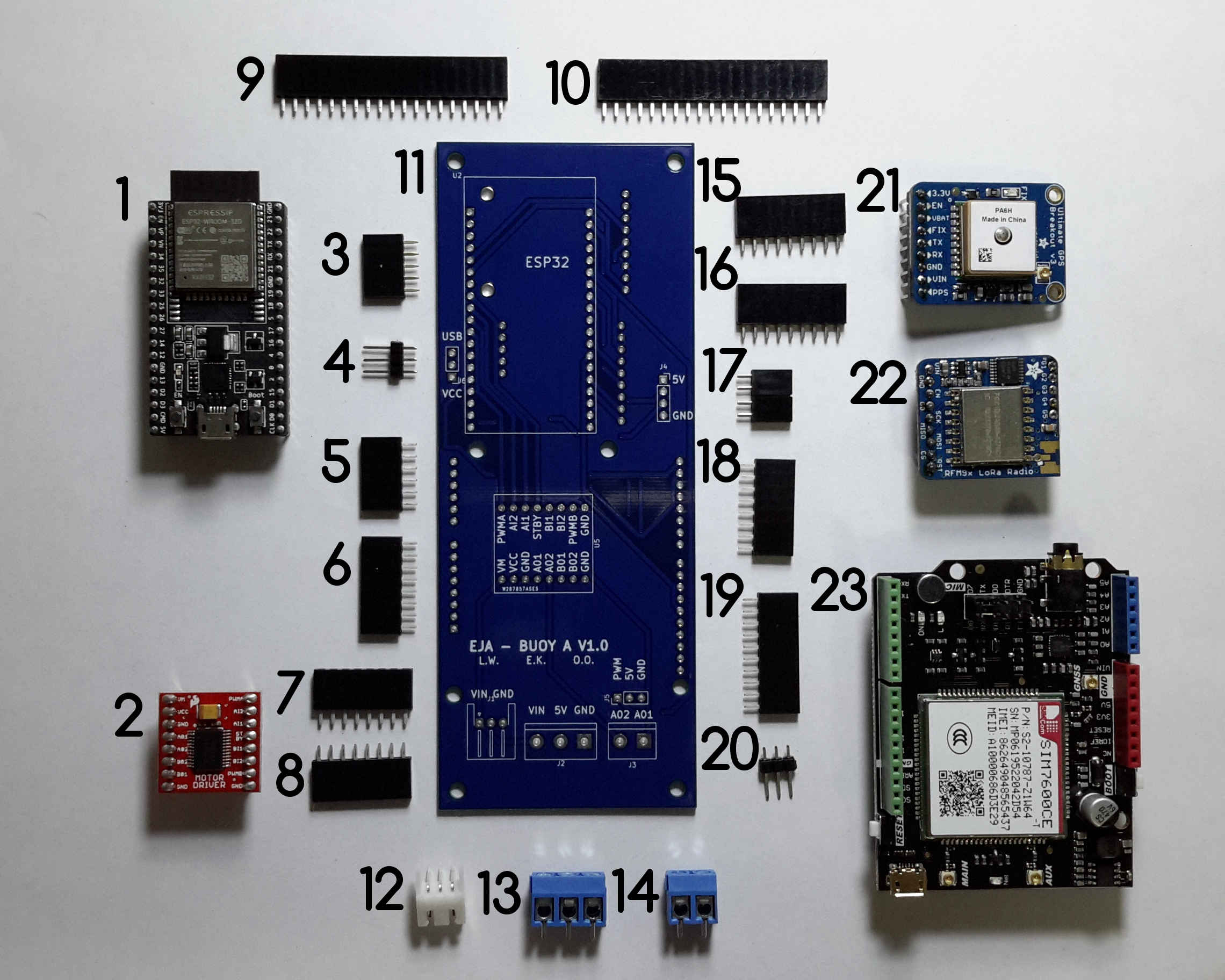
Components of Buoy A v1.0.
Components List:
- ESP32-DEVKITC-32D
- TB6612FNG MOTOR DRIVER BOARD
- CONN HDR 5POS 0.1 GOLD PCB
- CONN HEADER VERT 3POS 2.54MM
- CONN HDR 6POS 0.1 TIN PCB
- CONN HDR 8POS 0.1 TIN PCB
- CONN HDR 8POS 0.1 TIN PCB
- CONN HDR 8POS 0.1 TIN PCB
- CONN HDR 19POS 0.1 TIN PCB
- CONN HDR 19POS 0.1 TIN PCB
- PCB Buoy A V1.0
- CONN HEADER R/A 3POS 2.5MM
- TERM BLK 3P SIDE ENT 5.08MM PCB
- TERM BLK 2P SIDE ENT 5.08MM PCB
- CONN HDR 9POS 0.1 GOLD PCB
- CONN HDR 9POS 0.1 GOLD PCB
- 2 CONN HDR 2POS 0.1 GOLD PCB
- CONN HDR 9POS 0.1 GOLD PCB
- CONN HDR 10POS 0.1 TIN PCB
- CONN HEADER VERT 3POS 2.54MM
- Adafruit Ultimate GPS
- RFM95W LoRa Radio
- SIM7600CE-T 4G(LTE) Arduino Shield
For a detailed Bill of Materials visit the following post.
For a detailed explanation about the soldering and assembly procedure visit the following post.
Wiring Diagrams
The following diagrams present the physical connections of the different boards and components of the Buoy A V1.0:
Power Management
- Battery (5V < Voltage < 15V)
- PCB Board Buoy A V1.0
- Buck Converter
- Switch
- Extra capacitor
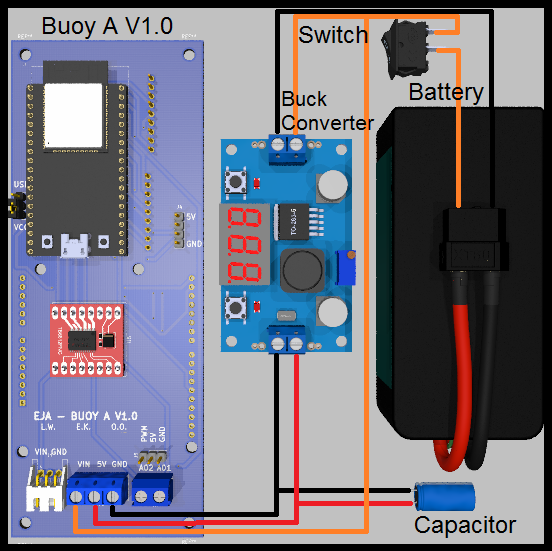
Wiring diagram: Power Management with Buck Converter.
Similar to Buoy B, there is an alternative for the battery management, is possible to provide the required voltages with a boost converter and a 3.7V Battery, like the following example:
- 3.7V 1 Cell Battery
- PCB Board Buoy A V1.0
- Boost Converter
- Micro USB Breakout Board
- Switch
- Extra capacitor
- JST-XH 2 Pos female connector and a JST-XH 2 Pos male connector
- 5V Charger (only used to charge the battery)
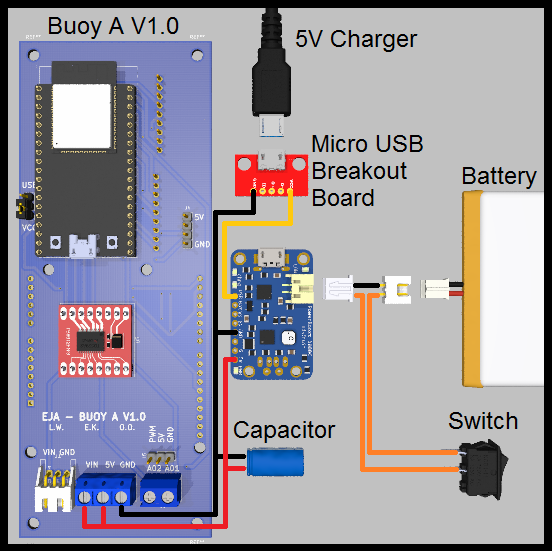
Wiring diagram: Power Management with Boost Converter.
This alternative is valid and possible, but is not ideal for longer working time (compared to the first one). It is important to consider the efficiency of the boost converter. The selected boost converter will have a voltage drop at a current higher than 500mA, that should be taken into consideration.
Motors
The board was designed to handle 2 different types of motors, those are:
- Servo Motor
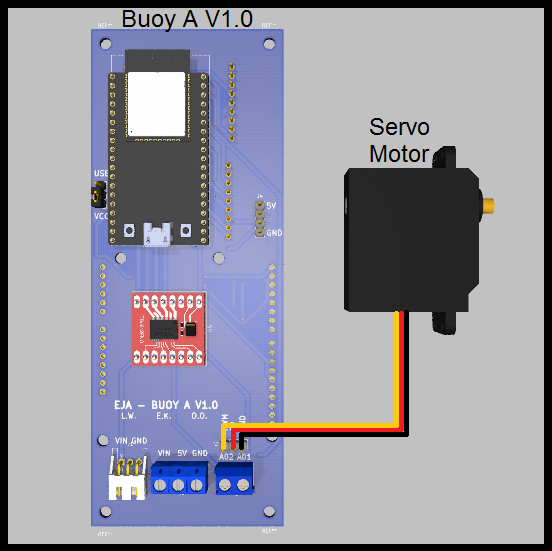
Wiring diagram: Buoy A v1.0 with Servo Motor.
- DC Motor (using the driver TB6612FNG)
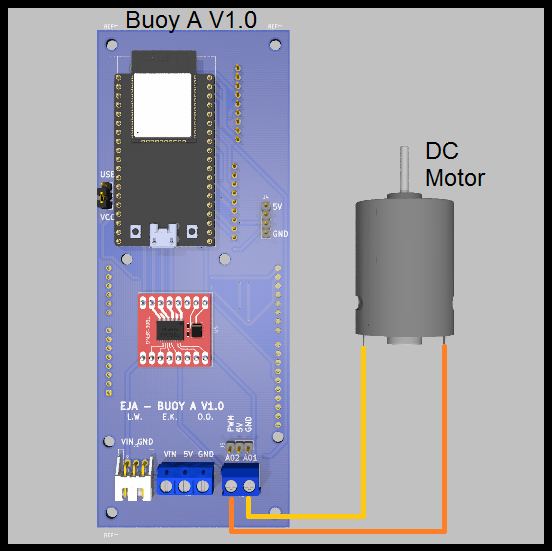
Wiring diagram: Buoy A v1.0 with DC Motor.
For more information about the wiring diagrams and the project visit the following post.
Firmware
Buoy A and Buoy B run the same ESP32 firmware — a captive Wi‑Fi access point with a DNS‑resolved web UI served from SPIFFS, TinyGPSPlus for the GPS, a 915 MHz RFM95W LoRa link to the topside Onboard Gateway, and the release‑timer countdown. Buoy A differs only in which parts are populated: it also carries the TB6612FNG motor driver and an optional SIM7600 GSM/GPRS shield for a cellular uplink where there is coverage.
The Buoy A firmware repository holds the library requirements; the buildable sketch is in the Buoy B firmware repository.
Step 5Refine
Future Improvements
For more information about the recommended future improvements for the electronic design visit the following post.
The Next Board: EJA M
For the project's second prototype, Buoy A, Buoy B and the Onboard Gateway were replaced by a single PCB, EJA M v1.0. Its planning keeps their features and adds four targets: lower cost (with these boards' bill of materials as the reference), a smaller board, battery charging on the board and a battery‑level measurement. The plug‑in modules give way to EJA M's own ESP32, LoRa, GPS, RTC and power‑supply circuits. The servo connector stays, now with its own 5 V 2 A step‑up; the TB6612FNG motor driver and the 4G(LTE) module do not, because the project was no longer using them.
Posted In:
Embedded Hardware